We may earn a commission when you buy through links on this page, at no extra cost to you. How this works.
Potting soil runs out of nutrients faster than most people expect - often within eight to twelve weeks after you bring a new plant home. That depletion isn't a sign you're doing something wrong; it's the natural result of frequent watering in a closed container. Organic liquid fertilizers address this gap without the sharp mineral salts found in many synthetic feeds, which makes them a safer choice when you're still learning to read your plants.
Liquid formulas absorb through roots almost immediately, so you see response within days rather than weeks. Granular organic options need time to break down, and slow-release spikes concentrate nutrients in one spot. A bottled liquid feed dilutes evenly in your watering can, reducing the risk of localized burn and giving you control over strength and frequency.
All five products in this guide cost less than twenty dollars and suit typical indoor conditions - low to moderate light, standard potting mix, and room-temperature water. They rely on plant and mineral sources rather than urea or ammonium nitrate, which means gentler nitrogen release and a smaller chance of salt buildup along pot rims. If you've lost plants to crispy leaf tips or stunted growth after feeding, an organic liquid approach lets you dial back concentration until you find the right rhythm.
Apartment growers benefit most because liquid feeds store compactly, don't smell strongly indoors, and mix in seconds. You skip the guesswork of top-dressing solid amendments, and you avoid tracking granules across floors. The trade-off is frequency: organic liquids typically call for every-other-week applications during the growing season, compared to quarterly doses for some slow-release products. That regular schedule becomes an advantage once you treat feeding as part of your watering routine rather than a separate chore.
Quick comparison
| All-in-One Complete Organic Plant Food for Houseplants and Gardens | Check current price and dilution ratio |
| Espoma 8 oz Concentrated Organic Indoor Plant Food | Check current price and concentration details |
| Fox Farm Big Bloom Liquid Organic Plant Food for Flowering & Fruiting Plants, 1 Pint | Check current price and bloom-stage fit |
Use the matching tool first
Start with Houseplant Watering Confidence Calculator if you want to narrow the fit before checking current offers.
How to Properly Use Liquid Fertilizer on Your Indoor Plants (Without Overdoing It)
- Always dilute concentrate to label strength - more is not better
- Water plants lightly before feeding to prevent root burn
- Feed during active growth season (spring through early fall) every 2 - 4 weeks
- Reduce or stop feeding in winter when growth slows
- Pour diluted fertilizer onto soil, not leaves, until water drains from bottom
- Flush soil with plain water monthly to prevent salt buildup
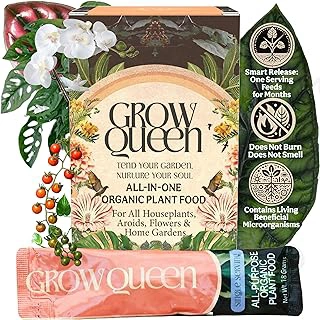
All-in-One Complete Organic Plant Food for Houseplants and Gardens
Renters with a mix of snake plants, pothos, and flowering African violets often struggle to manage multiple feeding schedules and specialty formulas. This all-in-one organic plant food addresses that friction with a single bottle suitable for both foliage and flowering varieties, eliminating the need to switch products mid-routine.
The formula is diluted before application, which gives beginners control over concentration and reduces the risk of over-feeding. If you've burned leaf tips with synthetic fertilizers in the past, the gentler organic base offers a safer margin for error while still delivering consistent nutrients.
At $16.99 with a 4.4 rating, this product fits tight budgets without sacrificing flexibility. The wide plant compatibility means you can feed a spider plant and a blooming kalanchoe from the same bottle, simplifying storage in small apartments.
Dilution instructions are straightforward, though you'll want to confirm the exact ratio on the label before mixing. The organic composition supports steady growth without the salt buildup common in synthetic options, making it a practical choice for containers that don't drain as freely.
This fertilizer works best for growers who value simplicity and want one dependable product for a diverse indoor collection rather than juggling separate formulas for each plant type.
- ✅ Works for both foliage and flowering plants in one bottle
- ✅ Gentle organic formula reduces over-fertilization risk
- ✅ Affordable at $16.99 for mixed plant collections
- ✅ Dilution control suits beginners and small spaces
- ⚠️ Requires manual dilution before each use
- ⚠️ Label confirmation needed for exact mixing ratios
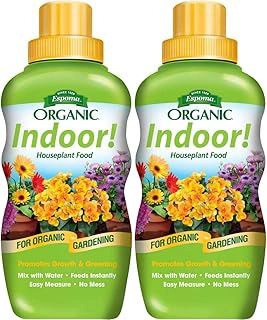
Espoma 8 oz Concentrated Organic Indoor Plant Food
An 8-ounce concentrate solves the storage puzzle for anyone juggling houseplants in a small apartment. The Espoma 8 oz Concentrated Organic Indoor Plant Food carries a 4.6 rating and costs $19.99, delivering many feedings from a bottle small enough to tuck beside your watering can or under the sink. Concentration matters when counter space and cabinet depth are spoken for: you dilute a capful per gallon of water, so the modest bottle lasts far longer than ready-to-use formulas that take up three times the room.
This organic formula fits the rhythm of monthly feeding schedules common to pothos, philodendrons, and snake plants without requiring a storage bin or separate shelf. The compact footprint also means less packaging waste over time, a practical benefit when you're already managing recycling in a tight kitchen. Because it's concentrated, the shelf life stretches further than diluted products, reducing trips to restock and the risk of half-used bottles cluttering your space.
The simplicity works well for beginners who want predictable results without measuring multiple additives or rotating between grow and bloom formulas. If you keep more than a dozen medium-to-large plants, you may find yourself reordering every few months, but for a one-bedroom setup with eight to ten pots, a single bottle typically covers an entire growing season. The organic formulation means you avoid synthetic salts that can build up in potting mix, though you'll still want to flush containers occasionally to prevent any mineral accumulation from tap water.
Space-conscious growers appreciate that the smaller bottle doesn't sacrifice feeding power; concentration per ounce remains high, so you're not trading performance for portability. If your windowsills and plant stands are already crowded, this compact option keeps your routine straightforward and your storage manageable without asking you to compromise on organic inputs.
- ✅ Compact 8 oz bottle fits tight storage spaces
- ✅ Concentrated formula provides many feedings per bottle
- ✅ 4.6 rating reflects consistent performance
- ✅ Organic formulation avoids synthetic salt buildup
- ✅ Long shelf life reduces restocking trips
- ⚠️ $19.99 price point higher than some diluted options
- ⚠️ May require reordering every few months for larger plant collections
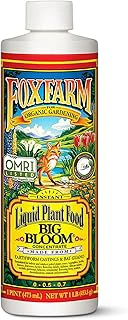
Fox Farm Big Bloom Liquid Organic Plant Food for Flowering & Fruiting Plants, 1 Pint
Flowering houseplants and fruiting herbs need different nutrients than foliage plants, and Fox Farm Big Bloom targets that shift with a phosphorus-focused organic formula. Rated 4.7 out of 5 and priced at $18.99 for a pint, this liquid concentrate supports bloom development and fruit set without the root burn that synthetic bloom boosters sometimes cause.
The formula is designed for the transition period when plants move from vegetative growth into flowering or fruiting stages. If you're growing African violets, peace lilies, or edible herbs like basil and tomatoes indoors, switching to a bloom-stage feed helps redirect energy toward flowers and fruit rather than leaves alone. The pint bottle dilutes into multiple gallons of working solution, so the upfront cost spreads across weeks of feeding.
This is not an all-purpose fertilizer. Foliage plants in active growth still benefit from balanced nitrogen, so Big Bloom works best when you can identify the growth stage and feed accordingly. The gentle organic formulation makes it easier to avoid overapplication, but you'll still want to follow dilution instructions and watch for any signs of nutrient buildup in the soil.
For anyone with a windowsill herb garden or a collection of blooming tropicals, this product fills a specific gap. The phosphorus emphasis encourages bud formation and supports the energy demands of flowering without pushing excessive leafy growth that can crowd out blossoms.
- ✅ Phosphorus-focused formula supports bloom and fruit development
- ✅ 4.7 out of 5 rating reflects reliable performance
- ✅ Organic formulation reduces risk of root burn
- ✅ Pint bottle concentrates into multiple gallons of feed
- ⚠️ Not suitable for foliage plants in vegetative growth
- ⚠️ $18.99 price point higher than general-purpose options
- ⚠️ Requires stage-specific timing to maximize benefit
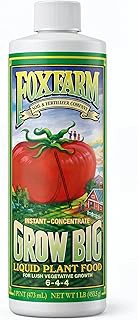
FoxFarm Grow Big Liquid Plant Food Concentrate, Pint Size
Plants that grow slowly or produce pale, undersized leaves often need a nitrogen boost during their active growth phase. FoxFarm Grow Big Liquid Plant Food Concentrate delivers that push with a formula designed to support vigorous vegetative development from spring through summer, before flowering begins.
At $18.99 for a pint concentrate, this fertilizer earns a 4.8 rating - the highest among the products in this guide. The concentrate format means you dilute it before feeding, stretching the bottle across dozens of applications for medium-sized indoor collections. The nitrogen-rich blend works well for foliage plants like pothos, monstera, and philodendron when you want larger leaves and faster stem growth.
Use Grow Big during the months when your plants naturally put out new growth. For most houseplants, that window runs from early spring through late summer. If you're growing flowering varieties, switch to a bloom-focused formula once buds begin to form; continuing a high-nitrogen feed during flowering can reduce bloom production. For strictly foliage plants, you can maintain this formula year-round at reduced winter frequency.
This fertilizer suits growers who track seasonal rhythms and want visible progress - thicker stems, deeper green color, and the kind of lush foliage that photographs well. It's less appropriate for succulents, cacti, or plants in dormancy. Always dilute according to label instructions; concentrated liquid fertilizers can burn roots if applied at full strength.
- ✅ 4.8 rating, the highest in this guide
- ✅ Nitrogen-rich formula supports fast vegetative growth and larger leaves
- ✅ Concentrate format stretches across many feedings at $18.99
- ✅ Ideal for spring and summer growth phases
- ⚠️ Must be diluted carefully to avoid root burn
- ⚠️ Not suitable for flowering stage or slow-growing succulents
- ⚠️ Requires switching formulas if plants begin to bloom
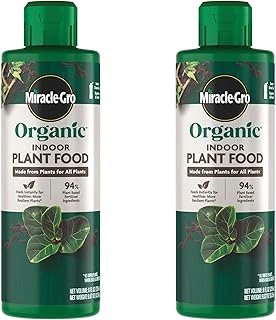
Miracle-Gro Organic Liquid Indoor Plant Food, 8 fl. oz
First-time fertilizer users often worry about overfeeding or choosing the wrong formula, and Miracle-Gro Organic Liquid Indoor Plant Food addresses both concerns with a familiar name and accessible design. The 8 fl. oz bottle retails for $17.18 and carries a 4.7 rating, reflecting confidence from beginners who appreciate straightforward instructions and consistent results across common houseplants.
Organic certification removes the guesswork around synthetic ingredients, while the liquid format dilutes easily in water for even distribution. The compact size works well for apartment dwellers managing a small collection of pothos, snake plants, or ferns without committing to bulk volumes. Because this product appears on shelves at grocery stores, hardware chains, and garden centers nationwide, you can restock quickly without waiting for online delivery or hunting specialty retailers.
The trade-off for convenience is a higher per-ounce cost compared to concentrate formulas in larger bottles. If you maintain more than a dozen plants or prefer custom dilution ratios, you may find yourself buying replacements often. The brand recognition that reassures cautious buyers also means paying a premium for packaging and distribution reach rather than formula complexity.
This fertilizer fits best when you want to start feeding houseplants without researching obscure brands or decoding ingredient lists. The bottle fits under most sinks, the measuring cap simplifies dosing, and the retail footprint means you can grab a replacement during routine errands instead of planning a separate order.
- ✅ Widely available in grocery and hardware stores for immediate purchase
- ✅ Organic certification reduces ingredient concerns for beginners
- ✅ 4.7 rating reflects reliable performance across common houseplants
- ✅ Compact 8 fl. oz size suits small plant collections and limited storage
- ⚠️ Higher per-ounce cost compared to bulk concentrate formulas
- ⚠️ $17.18 price point adds up quickly for larger plant collections
- ⚠️ Smaller bottle requires frequent restocking for active growers
Our Top 5 Picks for Organic Liquid Fertilizers
Choosing the right organic liquid fertilizer starts with understanding what each product does best. The five options below cover the full range of indoor plant needs, from general feeding to specialized growth stages.
First up is an all-purpose formula that works across most houseplants without needing to adjust ratios or dilution schedules. It fits windowsill collections, mixed plant stands, and beginners who want one reliable bottle.
Next is a concentrated option designed for smaller spaces. You use less per gallon, store a compact bottle, and still cover dozens of feedings. It makes sense if you have limited shelf room or a handful of pots rather than a full indoor garden.
The third pick focuses on flowering and fruiting plants. Its nutrient ratio supports bud formation and bloom duration, so it pairs well with orchids, African violets, or any plant you grow for flowers rather than foliage alone.
Fourth is a fast-acting foliage formula. It delivers nitrogen in forms that green up leaves quickly, which helps ferns, pothos, and other leafy varieties fill out between pruning cycles.
Finally, a trusted brand option offers consistent quality and wide retail availability. You can reorder easily, compare prices across stores, and rely on predictable results without hunting down niche suppliers.
Prices span roughly ten to twenty-five dollars depending on bottle size, with concentrates offering more feedings per ounce. Bottle sizes range from eight ounces to one quart, so match the volume to how many plants you maintain and how often you fertilize.
Organic vs. Synthetic: What's the Real Difference Indoors?
The choice between organic and synthetic liquid fertilizers affects more than just your plant's growth rate. Organic formulas release nutrients gradually as soil microbes break down natural ingredients like fish emulsion, kelp extract, or composted plant matter. Synthetic fertilizers deliver concentrated mineral salts that plants absorb immediately, producing faster visible growth but leaving behind residue that can accumulate in potting mix over time.
In small indoor spaces with limited air circulation, organic options offer practical advantages. They introduce this product microorganisms that improve soil structure and nutrient availability without the sharp chemical odor or salt crust that synthetic products often create around drainage holes. The slower nutrient release also reduces the risk of overfeeding, which matters when you're watering plants in the same rooms where you sleep or work.
Organic fertilizers typically cost 20 - 40% more per bottle, but the tradeoff shows up in healthier root systems and less frequent repotting. Salt buildup from synthetic formulas forces many indoor gardeners to flush containers every few months or replace soil entirely when plants begin to wilt despite regular watering. Organic feeding schedules usually run every two to four weeks rather than weekly, stretching the product further and lowering the chance of burning tender foliage.
Renters and apartment dwellers gain an additional benefit: organic formulas rarely stain countertops or leave residue on windowsills, and the earthy smell dissipates within an hour rather than lingering for days. If you've lost plants to crispy leaf tips or stunted growth after switching potting mix, the gentler chemistry of organic options helps restart growth without shocking recovering roots. The long-term value comes from fewer replacements and the flexibility to skip a feeding without immediate consequences.
Which Formula Fits Your Plant Collection?
Most indoor gardeners can simplify their fertilizer routine by matching one bottle to the plants they actually own. If you keep a mixed collection of pothos, snake plants, succulents, and maybe one flowering plant, an all-purpose organic liquid fertilizer covers everything without requiring separate formulas for each shelf.
Foliage-focused formulas work well when your collection leans heavily toward leafy tropicals like philodendrons, monsteras, and ferns. These products typically offer a nitrogen-rich ratio that supports steady green growth and helps plants recover quickly after pruning or repotting.
Bloom boosters make sense if you grow African violets, orchids, or other flowering houseplants that need extra phosphorus to set buds. You can keep one all-purpose bottle for your foliage plants and add a bloom formula only for the specimens that flower reliably indoors.
Renters with five to fifteen plants rarely need more than one bottle. Choose based on what fills most of your windowsills, and remember that over-fertilizing causes more problems than using a slightly imperfect ratio. If half your plants are foliage and half are succulents, an all-purpose formula at half strength every other watering will serve both groups without waste.
Frequently Asked Questions About Fertilizing Houseplants
Can you use outdoor garden fertilizer on houseplants? No - most garden formulas are concentrated for soil volume and drainage conditions that don't exist indoors, and they'll burn roots in containers. Indoor plants need gentler dilution rates and slower-release feeding schedules.
How do you know if a plant actually needs fertilizer? Slow growth during the growing season, smaller new leaves, or pale color can signal nutrient deficiency. But check light and watering first - those cause the same symptoms far more often. If the plant sits in bright light, the soil drains well, and you water consistently, then food is the next variable to adjust.
Is organic liquid fertilizer safe around pets? Organic formulas made from fish, seaweed, or plant extracts are generally less toxic than synthetic salts, but they're still concentrated nutrients. Store bottles out of reach, wipe up spills immediately, and don't let pets drink runoff water from saucers.
Can you mix two different fertilizer brands in the same watering? Not recommended. Each product lists dilution instructions based on its own nutrient profile, and combining them makes it nearly impossible to calculate what your plant is actually receiving. Finish one bottle before switching, or use separate products on different plants.
Conflicting advice online usually stems from differences in plant species, pot size, light levels, and local water chemistry. Focus on the variables you can observe in your own space - growth rate, leaf color, and soil moisture - and adjust feeding frequency one step at a time rather than chasing every recommendation at once.
Final Thoughts: Start Simple, Feed Consistently
The right organic liquid fertilizer matters less than using it consistently and observing how your plants respond. Pick one balanced, all-purpose formula from the options above, dilute it according to the label, and feed every two to four weeks during spring and summer when your houseplants are actively growing. That rhythm covers most common indoor species without overthinking it.
Healthy plants come from routine care, not from expensive bottles or complicated feeding schedules. If you notice slow growth or pale leaves, increase frequency slightly. If leaf tips brown or growth looks leggy, pull back. Trial and error is normal - you're learning what each plant needs in your specific light, temperature, and potting mix, and every home is a little different.
Start with half the recommended dose for the first few applications, especially if your plants are new to regular feeding. Watch for brighter foliage and steady new growth over the next month. Adjust from there. Consistency beats perfection, and small, regular meals work better than occasional heavy feeding.