We may earn a commission when you buy through links on this page, at no extra cost to you. How this works.
Small apartments force difficult choices: keep the walkable floor space clear, or make room for the growing plant collection. Tiered plant stands solve both problems by stacking six to eight plants vertically within the same footprint as a single pot, and the four options compared here range from $28 to $76.
Instead of lining up plants along this product or crowding windowsills, a tiered stand uses height to multiply usable planting area without blocking pathways or taking up square footage. A three-tier corner design, for example, fits into dead zones that rarely accommodate furniture, while freestanding ladder-style stands lean against walls and free up the center of a room.
Each stand reviewed here addresses a specific small-space challenge: budget shoppers working with limited funds, corner configurations that waste less floor area, tight spots that need narrow profiles, and low-light rooms where plants struggle without supplemental lighting. Material, weight capacity, and assembly complexity vary across models, so matching the stand to your apartment layout and plant sizes matters more than picking the most expensive option.
The comparison focuses on real differences in footprint, tier spacing, pot compatibility, and structural stability rather than decorative style. Understanding these tradeoffs makes it easier to choose the stand that holds your plants securely while fitting into the space you actually have available.
Use the matching tool first
Start with Houseplant Watering Confidence Calculator if you want to narrow the fit before checking current offers.
Material Tradeoffs: Wood, Bamboo, and Metal Stands
Choosing between wood, bamboo, and metal frames shapes how much weight your stand can hold and how long it will last in typical apartment humidity. Each material comes with clear tradeoffs that affect both function and appearance.
Wood and bamboo stands offer the lightest construction and usually the lowest price. They work well for small plastic nursery pots or lightweight resin planters, but weight limits often cap around 10 - 15 pounds per shelf. Bamboo resists moisture slightly better than untreated pine or fir, though neither should sit in standing water or near a humidifier vent. Both materials fit naturally into Scandinavian, bohemian, or farmhouse decor, and their warm tones pair easily with neutral apartment walls.
Metal frames - whether powder-coated steel or wrought iron - support heavier ceramic and terracotta pots without flex. Shelves on metal stands typically handle 20 - 30 pounds each, making them suitable for larger snake plants, monstera, or multiple six-inch pots on one tier. Powder coating prevents rust in humid bathrooms or kitchens, though scratches can expose bare metal over time. The industrial or minimalist look suits modern and urban apartment styles but may feel stark in softer, plant-heavy spaces.
Maintenance differs by material. Wood and bamboo benefit from occasional dusting and should be wiped dry if water spills during watering. Metal stands need less attention but should be checked for rust spots near drainage trays. If you water plants in place, consider metal or bamboo over untreated wood to avoid warping.
Match the material to your pot collection and plant size. Lightweight stands work for propagation stations, succulents, or air plants in small containers. Metal frames suit anyone with a mix of six-inch or larger ceramic pots, trailing pothos that add weight when watered, or fiddle-leaf figs that need stable support as they grow. Your apartment's humidity and decor style will narrow the choice further.
Corner Stands vs Straight Stands: Which Saves More Space?
Corner tiered stands fit into the angled junctions where two walls meet, claiming space that typically stays empty. A triangular footprint, like the one on the ROSSNY, tucks completely into that 90-degree corner and leaves most of your walking path open. Straight stands need a flat wall and extend perpendicular into the room, which narrows the clearance in front of them and can interrupt traffic flow in a narrow hallway or tight living area.
Floor area matters more than you might expect in a studio or one-bedroom. A straight three-tier stand often projects 10 to 12 inches from the wall, while a corner stand uses roughly the same depth but angles it into dead space. If your couch sits opposite the wall, a straight stand may force you to squeeze past or move furniture back. Corner placement keeps that central zone free.
Access works differently for each shape. Straight stands let you reach every pot from one side without leaning or turning, which speeds up watering and makes it simpler to rotate plants toward the light. Corner stands require you to step into the angle or rotate the unit slightly if pots sit deep in the back tier. That extra reach becomes noticeable when you own seven or eight plants and water twice a week.
Visibility shifts depending on where you spend time. A corner stand shows most of its profile when you look directly at it, but plants on the back tier can hide behind foliage on the front tiers when viewed from a sofa or chair positioned across the room. A straight stand offers a clearer line of sight to every level, so trailing vines and blooms stay visible from more seating angles.
Choose a corner design if your apartment has unused corner space near a window and you want to preserve walking lanes. Pick a straight stand when wall clearance isn't tight, you need quick access for frequent care, or you want every plant visible from your favorite chair.
Do You Need Built-In Grow Lights?
Built-in grow lights add $34 to $47 to the price of a tiered plant stand, which makes sense if you face limited natural light but becomes an unnecessary expense when windows already provide adequate this product. The BACEKOLL ladder and the 8-tier S-shaped stand both include full-spectrum LED bars, while the Yaheetech 6-tier and VIVOSUN 4-tier models rely entirely on ambient light from your apartment.
North-facing windows, basement units, and interior rooms with no direct sun exposure create situations where supplemental lighting shifts from nice-to-have to essential. Succulents, herbs, and flowering plants struggle in low-light conditions, and a stand with integrated LEDs can deliver 6 to 12 hours of targeted light without requiring separate lamp fixtures or extension cords snaking across your floor.
The built-in timers on both grow-light models automate the daily cycle, so you don't need to remember to switch lights on each morning or off before bed. Electricity cost remains minimal - most full-spectrum LED bars pull 10 to 20 watts per fixture, translating to roughly $2 to $4 per year if you run them 12 hours daily at average U.S. rates.
These integrated lights work best as supplemental sources rather than sole providers. If your apartment receives even a few hours of indirect daylight, the LEDs fill the gap during morning and evening hours. In spaces with zero natural light, you may still need to rotate light-hungry plants or accept slower growth rates compared to a dedicated grow-light shelf with higher wattage output.
Budget models without lights make the most sense when your windows face east, west, or south and your plant collection includes pothos, philodendrons, or other species comfortable in moderate indirect light. Spending an extra $34 on the BACEKOLL or $47 on the 8-tier S-shaped stand only pays off when natural light falls short and you want the convenience of built-in automation instead of juggling separate clip-on lamps.
Weight Limits and Stability: What You Need to Know
Total load matters more than individual pot weight. A typical six-inch ceramic pot with damp soil weighs between three and five pounds, and a gallon of potting mix adds roughly eight pounds of weight. Multiply those figures by the number of shelves you plan to fill, then add water retention after a thorough watering session, and you quickly approach the upper limits of lightweight stands.
Bamboo frames handle moderate loads well but flex under concentrated weight on a single tier. Metal wire construction distributes pressure across multiple contact points, making it less prone to warping when you cluster heavier pots on one shelf. Solid wood platforms offer the stiffest surface, though joints and hardware become the weak points if assembly leaves any play in the frame.
Apartments with older hardwood floors often have slight slopes or gaps between boards. A stand with adjustable feet or rubber pads compensates for minor unevenness and prevents rocking when you water plants or move pots around. In high-traffic hallways or corners near doorways, a wider base footprint reduces tip risk compared to tall, narrow designs.
Distribute your heaviest pots on lower tiers to keep the center of gravity close to the floor. If you place trailing or top-heavy plants on upper shelves, check that the stand remains stable when you lean in to prune or rotate foliage. For stands taller than four feet or those holding more than fifty pounds total, wall anchors add a safety margin in homes with pets or children.
Calculate your combined weight before you buy, and leave at least twenty percent headroom below any stated capacity to account for soil settling and the extra mass of wet terra-cotta or concrete planters.
Assembly and Maintenance: What to Expect
Most tiered plant stands arrive flat-packed and require 15 to 45 minutes for assembly, depending on the number of shelves and the material. Bamboo and wood designs often use a simple slot-and-pin system where tiers slide into pre-drilled side panels, requiring no tools beyond the included hardware. Metal stands typically involve more steps: attaching shelves to frame rails with screws or bolts, aligning brackets, and tightening multiple connection points with an Allen key or screwdriver.
If your stand includes grow lights, expect an additional 10 to 15 minutes to route the power cord, attach the light bar to the frame, and verify the timer or switch functions correctly. Some models use cable clips or twist ties to keep cords neat, while others leave this to you. Before starting, clear a flat workspace and check that all parts match the instruction sheet - missing hardware is rare but can delay assembly by days if you need a replacement.
Once built, maintenance centers on protecting both the stand and your floor. Wipe shelves weekly to remove dust and mineral deposits from misting or watering runoff. Wood and bamboo surfaces should be checked monthly for water stains or soft spots, especially if you water plants in place; even treated finishes can degrade over time. Metal frames resist moisture better but may develop rust if water pools along welds or joints. Tighten any loose screws or bolts every few months, as the weight of potted plants and routine adjustments can gradually loosen connections.
For stands with integrated grow lights, clean the LED panels or bulbs every two to three weeks using a dry microfiber cloth. Dust buildup reduces light output and can create uneven growth. If your fixture uses replaceable bulbs, note their rated lifespan - typically 25,000 to 50,000 hours - and keep a spare on hand to avoid gaps in your lighting schedule.
Renters should plan for disassembly when moving. Most stands break down into the same flat components they arrived in, though reassembly may be trickier if you lose the original instructions. Take photos during your first build to document hardware placement and shelf order. Store screws and small parts in a labeled bag taped to one of the larger panels. Stands that rely on tension or friction fits rather than threaded fasteners are easier to disassemble and reassemble repeatedly, making them a practical choice if you move frequently.
Maximize Your Greenery and Your Floor Space
Apartment dwellers no longer have to choose between a growing plant collection and usable floor space. The four tiered stands in this guide solve that problem by stacking vertically, fitting into corners, or folding flat when not needed. Each design addresses a different constraint: budget, lighting, footprint, or mobility.
The $28 to $76 price range reflects real differences in capacity, material durability, and features like integrated grow lights. A metal frame with six tiers holds more pots than a three-tier bamboo stand, but it also demands more wall clearance and weighs more when fully loaded. Corner stands reclaim unused floor area but limit how many plants you can display compared to straight designs.
Before purchasing, measure the intended location - not just width and depth, but ceiling height if you're considering a tall model. Check weight ratings against the combined heft of your pots, soil, and plants, especially if you use ceramic containers or large specimens. Confirm that any stand with grow lights fits your outlet layout and daily timer routine.
Current prices fluctuate, so verify the listed cost and read recent reviews for updates on packaging, assembly clarity, and long-term stability. Choosing the right stand means matching your space constraints, plant count, and budget to the specific tradeoffs each design offers.
How to Choose the Right Tiered Plant Stand for Your Apartment
- Measure your corner or wall space height, width, and depth before ordering
- Count how many plants you need to fit and check tier capacity
- Check your pot diameters against shelf spacing on the stand
- Verify the stand weight limit matches your heaviest pots when filled with soil and water
- Decide if you need grow lights based on your apartment's natural light availability
- Confirm an outlet is nearby if choosing a model with built-in lighting
Tips for Styling Your New Plant Stand
- Place tallest plants on the bottom tier to anchor the display and prevent top-heaviness
- Use trailing plants like pothos on upper tiers to cascade down and soften edges
- Group plants with similar watering needs on the same tier for easier maintenance
- Rotate pots weekly so all sides get equal light and plants grow evenly
- Leave at least one tier open initially to accommodate new plants or seasonal swaps
- Match pot colors or finishes for a cohesive look, or vary textures for visual interest
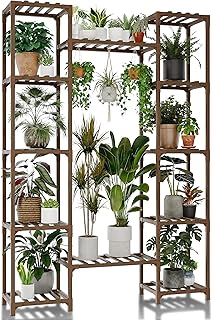
GENTINGBRO 62.2" Tall Wood Tiered Indoor/Outdoor Plant Stand
At $28.49, the GENTINGBRO 62.2" Tall Wood Tiered Indoor/Outdoor Plant Stand offers vertical display for small apartment budgets. The 62.2-inch height stretches upward rather than outward, making efficient use of floor space in tight corners or narrow entryways where horizontal stands would crowd walkways.
The wood construction suits both indoor windowsills and outdoor balconies, giving renters flexibility if they relocate plants seasonally. Multiple tiers spread plant heights across the frame, creating layered displays that help shorter plants receive adequate light without stacking them on furniture. The vertical arrangement also keeps soil and water drips contained to a smaller footprint than arranging pots individually across the floor.
Stability depends on pot weight distribution - lightweight ceramic or plastic pots under six inches work reliably, but heavier terra cotta or oversized planters near the top may tip the stand if unevenly loaded. Check that your tallest plant plus pot height leaves clearance between tiers, since fixed shelf spacing limits arrangement flexibility. Assembly typically requires basic hardware and about multiple minutes, with pre-drilled holes simplifying the process for most users.
This stand earns a 4.6 rating and fits apartment dwellers who need affordable vertical storage for small to medium pots. The narrow base suits corners and alcoves, though users should verify the width accommodates their specific pot diameters before purchase.
- ✅ Budget-friendly at $28.49
- ✅ 62.2-inch height maximizes vertical space in small apartments
- ✅ Wood construction works indoors and outdoors
- ✅ Multiple tiers create layered plant displays
- ✅ Narrow footprint fits tight corners and entryways
- ⚠️ Stability decreases with heavier pots near the top
- ⚠️ Fixed shelf spacing limits pot size flexibility
- ⚠️ Best suited for lightweight pots under six inches
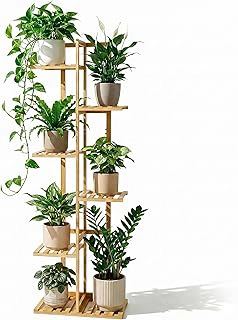
ROSSNY 48" Tall 6-Tier 7-Potted Bamboo Corner Plant Stand for Indoor Plants
Corner spaces in small apartments often sit unused, but the ROSSNY 48" Tall 6-Tier 7-Potted Bamboo Corner Plant Stand turns that awkward triangle into vertical garden real estate. Priced at $28.49 with a 4.3 rating, this stand offers an affordable way to display multiple plants without sacrificing open floor area.
The triangular footprint fits snugly into corners where rectangular stands won't go, and the six-tier design spreads seven pot slots across the listed size of height - tall enough to make use of vertical space while staying comfortably under standard 8-foot ceilings. Each tier holds one pot, with the bottom level accommodating two side-by-side, so you can mix small succulents with medium-sized ferns or pothos.
Bamboo construction keeps the weight reasonable while providing a natural finish that complements most décor styles. The material resists moisture better than particle board but still needs caution around spills and high humidity. Weight capacity per shelf isn't specified, so it's wise to stick with smaller to medium pots rather than oversized ceramic planters filled with wet soil.
Stability on uneven floors can be a concern with tall corner units. If your apartment has sloped or unlevel flooring, check that all three legs make solid contact and consider placing felt pads or shims under shorter legs to prevent wobbling. The narrow base and tall profile mean top-heavy arrangements may tip if bumped, so balance your heaviest pots on the lower tiers.
Before buying, measure your corner angle - most corners are multiple degrees, but older buildings sometimes have irregular walls. Confirm the stand's footprint matches your available space and that nearby ROSSNY 48" Tall 6-Tier 7-Potted Bamboo Corner Plant Stand for Indoor Plants or trim won't block the legs. At this price point, the ROSSNY offers a practical corner solution for renters and small-space dwellers who want to grow their collection without cluttering walkways.
- ✅ Triangular corner design saves open floor space
- ✅ 48-inch height fits under standard ceilings
- ✅ Seven pot slots across six tiers for mixed plant sizes
- ✅ Bamboo finish resists moisture better than particle board
- ✅ Affordable at $28.49 with 4.3 rating
- ⚠️ Weight capacity per shelf not specified
- ⚠️ Narrow base and tall profile may tip if top-heavy
- ⚠️ Stability depends on level flooring
- ⚠️ Requires 90-degree corner angle for proper fit
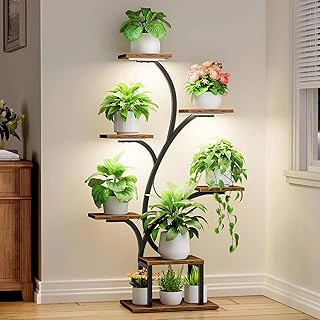
BACEKOLL 49" Brown Metal 7-Tier Tree-Shaped Corner Plant Stand with Grow Lights
Apartments with north-facing windows or limited natural light often struggle to keep plants healthy, but the BACEKOLL 49" Brown Metal 7-Tier Tree-Shaped Corner Plant Stand addresses this by integrating grow lights directly into the structure. Priced at $62.99 with a 4.6 rating, this stand combines vertical growing capacity with supplemental lighting in a single corner-friendly footprint.
The tree-shaped metal frame branches outward as it rises, creating seven individual plant platforms that fit into tight corners while maximizing usable surface area. Metal construction offers greater weight capacity and long-term durability compared to wooden alternatives, particularly in humid environments where moisture from watering can affect materials over time. The brown finish softens the industrial look of metal while maintaining structural stability across all seven tiers.
Built-in grow lights eliminate the need to position this stand near windows or invest in separate lamp fixtures. This makes it particularly useful for interior corners, bathrooms with plants, or rooms where window space is already claimed by furniture. The integrated lighting setup means you avoid the clutter of extension cords running to multiple standalone lights. Before placing the stand, confirm you have an accessible outlet within reach, as the system requires constant power access to operate the lights on schedule.
The seven-tier configuration allows you to group plants by light requirements - position high-light plants closer to the bulbs on upper tiers and shade-tolerant varieties lower down. Check that the grow light wattage matches your specific plant collection; seedlings and succulents have different intensity needs than ferns or pothos. The timer function automates the light cycle so you don't need to manually switch lights on and off daily, though you'll want to verify the timer settings align with your plants' photoperiod needs.
At this price point, you're paying a premium over basic tiered stands but gaining the convenience of built-in lighting that would otherwise require separate purchases and setup. The metal build trades the warmth of wood for improved moisture resistance and load-bearing strength, a fair tradeoff in small spaces where durability and functionality outweigh pure aesthetics.
- ✅ Integrated grow lights solve low-light apartment challenges without separate fixtures
- ✅ Metal construction offers better moisture resistance and weight capacity than wood
- ✅ Seven-tier tree shape maximizes corner space with branching platform layout
- ✅ Timer function automates daily light cycles
- ⚠️ Requires accessible outlet placement for constant power
- ⚠️ Higher price point than non-lighted tiered stands
- ⚠️ Metal aesthetic may feel less warm than wooden alternatives
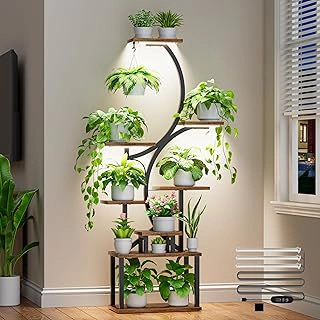
62" Tall 8-Tier S-Shaped Corner Plant Stand with Grow Lights - Brown
The 62-inch tall S-shaped corner stand holds eight tiers of plants in a single footprint, making it the highest-capacity option in this group. Its vertical design stretches from floor to eye level, letting you stack pots without claiming extra wall or floor area - useful when apartment corners sit empty but horizontal space runs tight.
The brown finish coordinates with wood furniture and neutral apartment palettes. Each tier is an independent platform arranged along the S-curve, so you can place pots of varying sizes rather than committing to uniform rows. The stand's S-shaped profile distributes weight along two vertical columns, which adds stability compared to straight ladder designs that lean into a single axis.
Integrated grow lights mount along the frame, giving you flexibility to position light-hungry plants on middle or lower tiers where natural window light doesn't always reach. This feature matters in apartments with limited south-facing windows or deep corners where ambient light fades by midday. The lights run on a plug-in timer, so you can automate coverage without moving pots around seasonally.
At the listed size, the stand requires ceiling clearance above standard furniture height. Measure your corner's vertical space before ordering - apartment ceilings typically range from the listed size, leaving enough room, but sloped ceilings or ceiling fans can interfere. The eight-tier capacity suits collections of small to medium pots; heavier ceramic planters on every tier will increase total load, so confirm the weight limit matches your pot sizes and soil volume.
Assembly involves stacking and securing each tier along the S-frame. The brown powder-coated metal resists moisture better than bare steel, but you'll still want to use saucers under watered plants to prevent drips from reaching lower shelves or pooling on the floor. The corner orientation works best in true multiple-degree corners rather than angled walls or bay window recesses.
Currently priced at $75.99 with a 4.6 rating, this stand balances vertical capacity with built-in lighting for apartments where floor space is scarce but vertical corners remain open. Check the weight limit specification to ensure it supports your heaviest pots, and verify ceiling height before placing your order.
- ✅ Eight-tier capacity holds the most plants in a single footprint
- ✅ Integrated grow lights support plants in low-light corners
- ✅ S-shaped frame distributes weight along two vertical columns for stability
- ✅ Brown finish coordinates with wood furniture and neutral decor
- ⚠️ 62-inch height requires adequate ceiling clearance
- ⚠️ Total weight capacity limits number of heavy ceramic pots
- ⚠️ Corner orientation works best in true 90-degree corners