We may earn a commission when you buy through links on this page, at no extra cost to you. How this works.
Watering schedules cost nothing to follow, but they often cost you healthy plants. A rigid "every seven days" rule ignores the variables that actually control how fast soil dries: humidity levels in your home, pot material and drainage, seasonal light changes, and whether your plant is actively growing or dormant. A succulent in terracotta during winter may need water every three weeks, while the same plant in glazed ceramic during summer might want it weekly. Following a calendar instead of checking the soil means you're guessing, and guessing leads to root rot or bone-dry roots.
The alternative is simple: let the plant and its soil tell you when it's time. Instead of marking a planner, you'll use quick physical checks - the finger test, weight comparison, and leaf observation - that take seconds but deliver accurate signals. These methods work across plant types, pot sizes, and seasons because they respond to real conditions rather than arbitrary intervals.
This guide walks through the core techniques for reading moisture levels without a schedule, explains what different soil textures and leaf cues mean, and shows you how to adapt watering frequency as conditions shift. You'll learn to distinguish between "dry to the touch" and "dry two inches down," recognize early thirst signals before leaves wilt, and avoid the most common misreads that lead to overwatering. The goal is confidence: you'll water exactly when your plant needs it, not when a calendar says so.
What Matters Most: Soil Moisture, Not the Calendar
Watering schedules fail because every houseplant lives in a different microclimate. A snake plant in a glazed ceramic pot near a north-facing window will hold moisture far longer than the same species in a terracotta pot on a sunny shelf. The only constant is the soil itself - when it dries to the right level for that plant, it's time to water.
Soil moisture changes based on four variables that shift daily. Room temperature drives evaporation rates; a 75°F living room pulls water from soil faster than a 65°F bedroom. Humidity affects how quickly moisture escapes through the pot and the plant's leaves. Pot material matters because terracotta breathes and wicks moisture outward, while plastic and glazed ceramic hold water in. Plant species determine how much water the roots actually pull; a pothos drinks heavily during active growth, while a succulent sips slowly year-round.
These variables never align on a fixed schedule. A plant that needed water every seven days in January may need it every four days in July when heat and daylight hours increase. Relying on the calendar means you'll either underwater during growth spurts or overwater during dormancy. Checking the soil directly tells you what's happening right now, in that specific pot, for that individual plant.
This approach requires a simple shift: instead of asking "Is it watering day?" you ask "Does this soil need water?" The techniques in the following sections - finger tests, moisture meters, and leaf cues - all answer that second question. Once you learn to read moisture levels, you stop guessing and start responding to what each plant actually uses.
The Finger Test: Your Free First Tool
The finger test is the easiest, no-cost way to check soil moisture before you water. Push your index finger into the soil to a depth of one to two inches - about the length from your fingertip to the second knuckle. What you feel at that depth tells you whether the plant is ready for water.
Dry soil will feel powdery, crumbly, or firm, with no moisture clinging to your skin when you pull your finger out. This usually means it's time to water most houseplants. Barely moist soil will feel cool and slightly damp but won't leave wet residue on your finger; many plants do well when watered at this stage, especially those that prefer consistent moisture like ferns or calatheas. Wet soil will feel muddy, stick to your finger, and may even leave a slick film - wait to water if this is what you find, unless you're growing a moisture-loving plant in a self-watering setup.
The finger test works best for small to medium pots with loose, well-draining potting mix. In deeper containers - anything over ten inches tall - your finger may only reach the top layer, which dries faster than the root zone below. Dense root balls or compacted soil can also make it hard to insert your finger or give you a misleading read at the surface while the center stays wet. For those situations, you'll want to pair the finger test with a moisture meter or the pot-weight method to get a complete picture of what's happening deeper down.
Even with its limitations, the finger test gives you a real-time snapshot of moisture where many roots live, and it trains you to recognize the difference between dry, moist, and soggy soil by touch. Use it as your first check every time you think a plant might need water, and you'll quickly build the habit of watering based on actual conditions rather than the calendar.
The Pot Weight Method for Consistent Accuracy
Lifting your pot before and after watering teaches you to recognize when the soil is truly dry. A saturated pot feels noticeably heavier than a dry one, and once you learn the weight difference for each plant, you can make watering decisions quickly without any tools.
Water your plant thoroughly until water runs from the drainage holes, then lift the pot and note how heavy it feels. Over the next several days, lift the same pot every morning or evening. As the soil dries, the pot becomes lighter. When it feels much lighter than it did right after watering, the plant is ready for water again.
This method works best for small to medium pots - roughly four to eight inches in diameter - that you can comfortably lift with one or both hands. Larger pots become impractical to hoist repeatedly, and very small pots dry so quickly that weight changes are harder to detect. The technique adapts to any soil type, from dense peat mixes to chunky orchid bark, because you're measuring total moisture rather than surface texture.
Consistency matters. Lift the pot from the same position each time, and use the same grip so the sensation stays reliable. After two or three watering cycles, the weight cues become intuitive, and you'll spot dryness within seconds. Pair this method with a quick visual check of the soil surface to confirm your read, especially while you're still building confidence.
The pot weight method shines in situations where finger testing is inconvenient - such as hanging baskets, crowded shelves, or pots with top dressings like pebbles or moss. It also helps when you're managing multiple plants of the same species and pot size, since the baseline weight becomes familiar across the group.
Visual Leaf Signals That Tell You When to Water
Visual cues from your plant's leaves offer important confirmation that it's time to water, but they work best as backup signals rather than your first line of defense. Many houseplants show stress only after the soil has been dry for too long, so relying solely on what you see can leave you watering a day or two late.
Slight leaf droop is one of the most reliable visual indicators. When a plant starts to lose turgor pressure - the water tension inside its cells - leaves soften and begin to sag. This droop is often subtle at first, especially in plants like pothos, philodendron, or peace lily. If you catch it early, the plant will perk up within hours of watering. Wait too long, and recovery takes longer or leaves may yellow and drop.
Dull or matte leaf color can signal dehydration in plants that normally display glossy foliage. Compare the current appearance to how the plant looked after its last watering. If the shine has faded and the surface looks flat, the plant may be pulling moisture from its leaves to sustain stems and roots.
Dry or crispy leaf edges and tips appear when roots can't pull enough water to supply the entire leaf. This is common in calathea, spider plants, and ferns, which have high moisture demands. By the time edges turn brown, the soil has likely been too dry for several days. Trimming damaged edges won't reverse the dehydration - only consistent moisture monitoring will prevent it from recurring.
Leaf curling or inward rolling is a defensive response that reduces surface area and slows water loss. You'll see this in prayer plants, rubber plants, and some succulents. Curling doesn't always mean underwatering - it can also result from low humidity or heat stress - so check the soil before deciding to water.
Use these visual signals to confirm what you've already learned from the finger test or a moisture meter. If leaves look stressed and the top two inches of soil are dry, water thoroughly. If the soil still feels moist but leaves are drooping, consider other factors like rootbound conditions, poor drainage, or pest pressure. Visual cues are useful, but they tell you what happened yesterday. Checking the soil tells you what your plant needs today.
Quick Checklist: Signs Your Plant Actually Needs Water
- Top 1 - 2 inches of soil feel dry to the touch
- Pot feels noticeably lighter than after watering
- Leaves show slight droop or less vibrant color
- Soil pulls away from the edge of the pot
- Moisture meter reads in the dry zone for that plant type
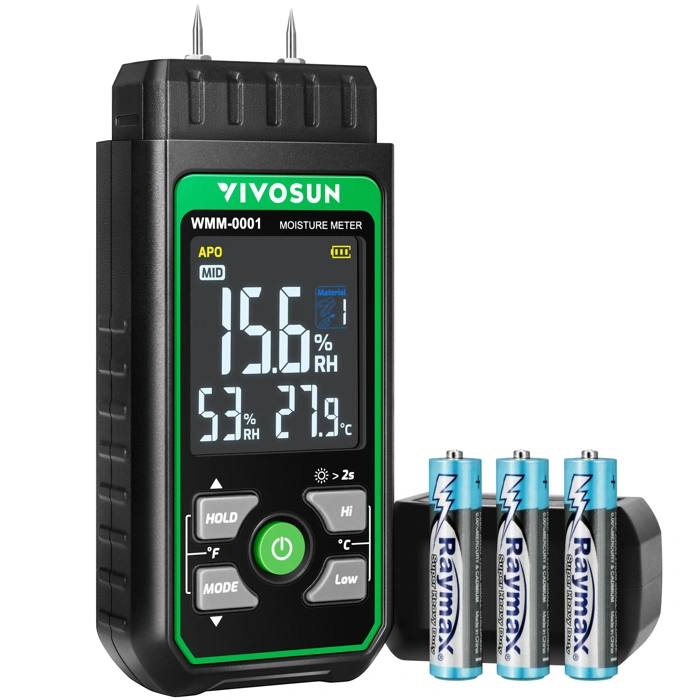
VIVOSUN 3-In-1 Pin-Type Digital Wood Moisture Meter, Ambient Temp & Humidity, 7 Modes
The VIVOSUN 3-In-1 Pin-Type Digital Wood Moisture Meter offers a combined approach for growers who want to monitor soil moisture, ambient temperature, and humidity from one device. Priced at $23.74, it sits in the middle of the meter price range and adds environmental tracking to basic moisture readings.
This meter uses a pin-type design, inserting two metal probes into the soil to measure moisture levels. It features 7 modes, allowing you to switch between different functions - soil moisture, ambient temperature, and relative humidity - without carrying multiple tools. The multi-function design is practical if you're managing houseplants that need specific humidity conditions or if you want to correlate watering needs with room temperature fluctuations.
Pin-type meters like this one give you direct soil contact, which can be more precise than purely capacitive sensors, but the pins may disturb roots in smaller pots if used frequently. The 7 modes provide flexibility, though users should be aware that ambient temperature and humidity readings measure the air around the plant, not soil temperature, which can be a useful distinction when diagnosing environmental stress.
Rated 4.4 out of 5, the VIVOSUN meter balances cost and functionality for growers who want more than moisture data alone. It's a sensible choice if you're tracking multiple environmental factors and prefer consolidating tools, though those who only need soil moisture feedback may find simpler, single-function meters less complex to use daily.
- ✅ Multi-function design measures soil moisture, ambient temperature, and humidity
- ✅ 7 modes provide flexibility for different monitoring needs
- ✅ Pin-type design offers direct soil contact for moisture readings
- ✅ Mid-range price at $23.74 for three functions in one tool
- ⚠️ Pins may disturb roots in small pots with frequent use
- ⚠️ More complex than single-function meters if only soil moisture is needed
- ⚠️ Ambient readings measure air, not soil temperature
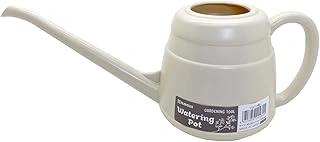
Japanese Long Spout Watering Can for Houseplants, 850 ml
Once you've determined your plant needs water - by checking the soil, weighing the pot, or reading leaf cues - the next step is delivering that water gently and precisely. The Japanese Long Spout Watering Can is an 850 ml tool designed for houseplants, with a long, narrow spout that reaches the soil surface without splashing foliage or overshooting small pots.
This watering can works well for targeted watering sessions where you've already assessed individual plants and know exactly which ones need moisture. The extended spout lets you direct water to the base of the plant, reducing the risk of wetting leaves or flooding saucers. At 850 ml capacity, it holds enough for several small to medium pots without requiring constant refills, yet remains light and easy to maneuver around windowsills or shelves.
The narrow spout provides control, which is useful when you're watering plants with different needs in close proximity. You can deliver water slowly, giving the soil time to absorb moisture rather than running off the surface - a common issue with fast, heavy pours. This approach supports the observation-based watering method: you decide when, and this tool helps you execute that decision cleanly.
At $12.05, it's a budget-friendly option for anyone moving away from rigid schedules and toward responsive watering. The 4.6/5 rating reflects its practical design and reliability for everyday houseplant care. Keep in mind that the 850 ml size is better suited to smaller collections or spot-watering rather than large gardens or very thirsty plants that require several liters at once.
- ✅ Long spout reaches soil without splashing leaves
- ✅ 850 ml capacity balances refill frequency and maneuverability
- ✅ Controlled pour supports precise, observation-based watering
- ✅ Budget-friendly at $12.05
- ⚠️ Smaller capacity may require multiple refills for larger collections
- ⚠️ Narrow spout requires slower pouring, which takes more time
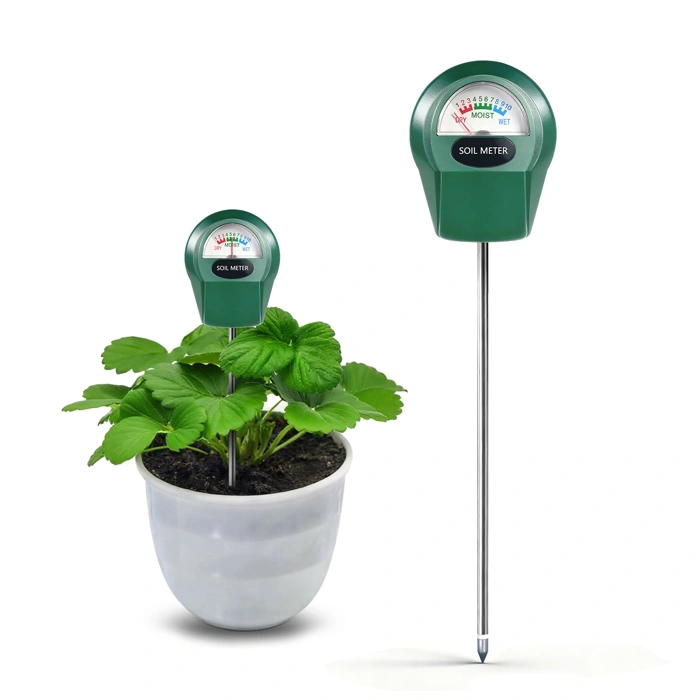
Zoiydals Soil Moisture Meter for Plants
The Zoiydals Soil Moisture Meter offers a straightforward way to check moisture levels without relying on the finger test alone. Priced at $7.19, it sits at the budget end of the moisture meter category and requires no batteries - just insert the probe into the soil and read the dial.
This tool is particularly useful for beginners still learning to interpret soil cues. The analog display provides a quick visual reference: dry, moist, or wet. Because it uses a simple analog mechanism, there are no settings to configure or batteries to replace, which keeps operation simple and maintenance-free.
The probe design works best when inserted a few inches into the soil, away from the pot's edge, to get an accurate reading of the root zone rather than just the surface. Keep in mind that the meter shows current moisture at the probe location - it won't tell you about drainage issues deeper in the pot or moisture pockets elsewhere. For that reason, it complements rather than replaces the habit of checking multiple spots and observing how quickly the soil dries between waterings.
With a 4.6 out of 5 rating, the Zoiydals meter has earned solid feedback for a low-cost tool. It's a practical pick for anyone building confidence in reading their plants' water needs, especially when managing a variety of species with different moisture preferences under one roof.
- ✅ Budget-friendly at $7.19
- ✅ No batteries required
- ✅ Simple analog dial - easy to read at a glance
- ✅ Helps beginners build confidence in assessing soil moisture
- ⚠️ Shows moisture only at the probe location, not the entire root zone
- ⚠️ Analog mechanism may be less precise than digital alternatives
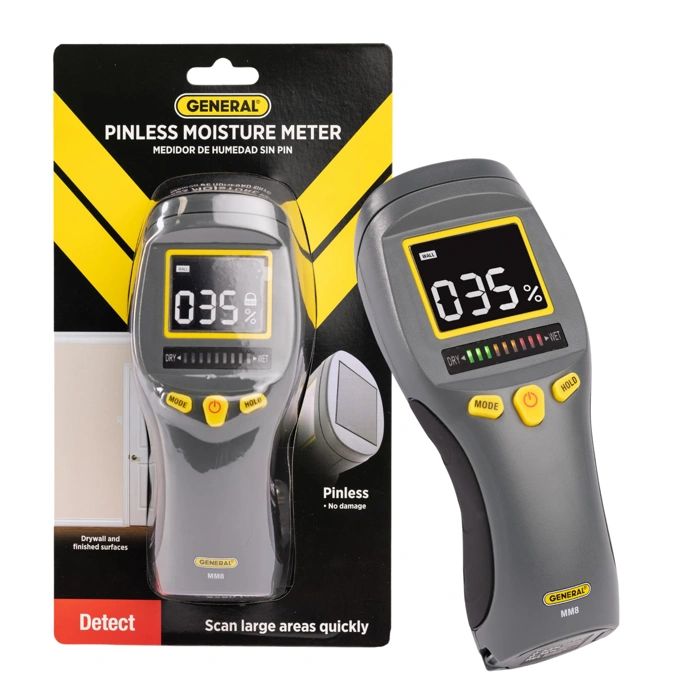
General Tools Pinless and Non-Invasive LCD Moisture Meter MM8
The General Tools Pinless and Non-Invasive LCD Moisture Meter MM8 takes a different approach to soil moisture monitoring. Instead of inserting metal probes into the soil, this meter uses electromagnetic sensing technology to scan moisture levels without piercing the root zone. This design makes it especially useful when you're working with delicate root systems, shallow-rooted species, or densely planted arrangements where repeated probing would cause disruption.
The LCD display provides a numeric moisture reading, which removes some of the guesswork you might encounter with analog scales or color zones. You simply place the sensing pad against the soil surface or pot exterior, and the meter detects moisture content below. Because there's no physical penetration, you can check the same plant multiple times in a single day without worrying about compacting soil or damaging fine roots.
This meter is rated 4.4 out of 5, and it's priced at $59.99. That places it at the higher end of the consumer moisture meter range, well above basic two-prong models that typically cost under twenty dollars. The trade-off is convenience and precision: the pinless design is faster for checking large collections, and the digital readout offers more granular feedback than a simple wet/moist/dry needle.
If you manage a sizable houseplant collection - say, twenty or more plants - or you grow species known for sensitive roots like ferns, calatheas, or orchids in bark media, the non-invasive feature becomes a practical advantage. You can monitor moisture trends across many pots without leaving a trail of probe holes. On the other hand, if you only have a handful of plants and they're in standard potting mix, a pin-type meter will likely meet your needs at a fraction of the cost.
One consideration: pinless meters measure moisture in the top layer or through the pot wall, so they may not capture deep moisture pockets in tall or extra-wide containers as accurately as a probe that reaches the root zone directly. For most houseplants in pots under ten inches, this limitation is minor, but it's worth keeping in mind if you work with deep planters or self-watering systems.
- ✅ Non-invasive electromagnetic sensing avoids disturbing roots or soil structure
- ✅ LCD display provides numeric moisture readings for clearer interpretation
- ✅ Fast to use across large plant collections without leaving probe holes
- ✅ Suitable for delicate root systems and shallow-rooted species
- ⚠️ Higher price point at $59.99 compared to basic pin-type meters
- ⚠️ May not capture deep moisture in tall or extra-wide containers as effectively as probe-style meters
- ⚠️ Measures surface or near-surface moisture, requiring interpretation for deeper root zones
Adjusting for Seasons, Pot Size, and Plant Type
No two houseplants follow the same watering rhythm, because need depends on season, pot size, and plant type working together. Winter light is weaker and heating can dry air, while summer sun and warmth push faster water use. A fiddle-leaf fig in a ten-inch pot will stay moist far longer than a pothos in a four-inch nursery pot under identical conditions, because soil volume acts as a reservoir. Succulents and cacti tolerate - and prefer - dry soil for days or weeks between waterings, while ferns and calatheas show stress if the top inch stays dry too long.
Reading the soil directly lets you respond to all these variables without memorizing separate schedules. In winter, you may find the top two inches stay moist for ten days instead of five. In summer or near a south window, that same pot might need water every three days. A small pot dries faster because roots fill the container and less soil holds less moisture. A large pot takes longer because the lower half stays damp even when the surface feels dry.
Checking moisture before you water means the plant tells you what it needs in real time. A succulent's soil should feel dry several inches down before the next drink. A fern's soil should stay lightly moist an inch below the surface, never bone-dry. When you rely on touch and observation instead of a fixed interval, seasonal shifts, pot upgrades, and the natural differences between species all stay in sync without extra planning.
Simple Next Steps: Build Your Watering Routine
Building a reliable watering routine starts with three simple actions. First, make the finger test your default check - push your finger one to two inches into the soil before you water any plant. This takes five seconds and gives you immediate feedback about moisture below the surface. Second, lift your pots regularly, especially your most common plants like pothos, snake plants, or succulents. After a few weeks, you'll recognize the lighter feel of dry soil versus the heavier weight of moist soil, giving you a second layer of confidence without any tools.
If you manage more than a handful of plants or grow varieties with similar-looking foliage, a basic moisture meter adds helpful clarity. Budget models show you moisture levels at root depth, which is especially useful in larger pots or for plants you're still learning. You don't need one for every plant - use it to verify your instincts and to troubleshoot when a plant isn't thriving.
Track which plants dry out fastest in your space. South-facing windowsills, terra-cotta pots, and smaller containers all accelerate drying, while ceramic pots in lower light hold moisture much longer. Keep a simple list or use your phone's notes to record patterns: "fiddle leaf fig near window, every 9 - 11 days in summer" or "snake plant in bedroom, every 3 weeks." These informal observations replace rigid schedules with flexible guidelines that adjust as seasons and conditions change.
This approach scales naturally. Whether you care for five plants or fifty, the same checks - finger test, pot weight, visual cues - work across your entire collection. You'll prevent overwatering by waiting for soil to dry to the right depth, and you'll catch underwatering before leaves droop or curl. As you gain experience, watering becomes faster and more intuitive, because you're responding to what each plant actually needs rather than following a calendar that can't account for humidity swings, temperature changes, or the differences between a plastic nursery pot and a glazed planter.