We may earn a commission when you buy through links on this page, at no extra cost to you. How this works.
Choosing the right planter pot means balancing what your houseplant needs to thrive with the look you want in your space. A pot that drains well keeps roots healthy, but the material, size, and style also shape how often you water, how long the pot lasts, and whether it fits your budget. Many people buy a pot based on appearance alone, then discover drainage holes are missing or the size forces them to repot sooner than expected.
This guide walks through the key decision points: drainage systems, material tradeoffs, sizing rules, and when to prioritize function over style. You'll learn how terracotta compares to ceramic and plastic, what "one size up" really means, and how to match a pot to your watering habits. By the end, you'll know which features matter most for your plant type and how to avoid the common mistakes that waste money or harm root health.
Whether you're repotting a fiddle-leaf fig or picking a first home for a new succulent, the right pot makes watering easier, reduces the risk of root rot, and keeps your plant looking good on your shelf or windowsill.
Who This Guide Is For
This guide is for anyone who has bought a beautiful houseplant only to watch it slowly decline in the wrong pot. If you're a beginner who has lost plants to overwatering, root rot, or mysterious wilting - and you're tired of conflicting advice from Pinterest boards and plant forums - this is for you. It's also for renters who want to create a green, stylish space without complicated systems or expensive mistakes.
Choosing the right planter pot is not just about aesthetics. The wrong pot can trap excess water, stunt root growth, or dry out soil too quickly, no matter how carefully you water. The right pot supports drainage, gives roots room to grow, and matches your plant's moisture needs - all while fitting your budget and style. This guide walks you through the practical decisions that matter: drainage holes, sizing, material tradeoffs, and how to balance function with the look you want.
You don't need to be a plant expert to keep houseplants alive. You need a practical foundation that removes guesswork and prevents the most common pot-related problems. If you want your plants to thrive and your space to look intentional, start by understanding what your pot actually does for your plant.
What Matters Most: Drainage, Size, Material, and Style
Choosing the right planter pot comes down to four core criteria: drainage, size, material, and style. Drainage is the single most important feature - pots without drainage holes trap excess water around roots, creating the perfect environment for root rot, which is the leading cause of houseplant death. A drainage hole paired with a saucer or cache pot lets water escape after each watering, keeping roots healthy and giving you more margin for error.
Size directly affects how often you'll water and how quickly your plant will grow. A pot that's too large holds excess soil moisture that roots can't absorb, inviting fungal problems. A pot that's too small dries out fast, stresses the plant, and may stunt growth. The general rule is to choose a pot one to two inches larger in diameter than the current nursery pot, giving roots room to expand without overwhelming them with wet soil.
Material impacts weight, breathability, and moisture retention. Terracotta is porous and wicks moisture away from soil, ideal for plants that prefer drier conditions but heavier to move. Plastic is lightweight, retains moisture longer, and works well for thirsty plants or forgetful waterers. Ceramic, metal, and concrete each bring different tradeoffs in durability, insulation, and portability.
Style ties the functional choice to your space. Once you've narrowed by drainage, size, and material, you can select a finish, color, or shape that complements your room without compromising plant health. This framework - drainage first, then size and material, then style - keeps decisions grounded and prevents costly mismatches.
Drainage: The Non-Negotiable (With One Exception)
Drainage holes are the single most important feature for keeping most houseplants alive. Without a way for excess water to escape, roots sit in saturated soil, suffocate, and rot - often the real culprit behind plants that suddenly wilt or turn yellow despite regular watering. A pot with at least one drainage hole at the bottom lets you water thoroughly, flushing out salts and ensuring oxygen reaches the root zone, then allows the surplus to drain away into a saucer.
If you've fallen for a gorgeous ceramic or metal planter with no hole, you have one reliable workaround: use it as a decorative cachepot. Leave your plant in its plastic nursery pot with drainage, set that nursery pot inside the pretty outer vessel, and lift it out to water over a sink. This keeps the roots safe while giving you the style you want. Just check that no water pools in the bottom of the cachepot after watering; tip it out if it does.
Pair any pot that has a drainage hole with a matching saucer to catch runoff and protect your furniture, windowsills, and floors. Empty the saucer fifteen to thirty minutes after watering so the pot isn't sitting in standing water. Clay saucers can weep moisture through their base, so consider a glazed ceramic saucer, plastic tray, or a waterproof mat underneath if you're placing the pot directly on wood or fabric. The takeaway: drainage isn't optional for healthy roots - build your setup around it, and you'll side-step the most common cause of houseplant failure.
Sizing Your Pot: Bigger Isn't Always Better
Choosing a pot that's too large is one of the most common mistakes when repotting houseplants. When a plant sits in a container that's significantly larger than its root ball, the excess soil stays wet long after the roots have absorbed what they need, creating conditions that encourage root rot and fungal problems. Most houseplants also grow more slowly in oversized pots because their roots spend energy spreading through the soil instead of supporting new leaves and stems.
For most repotting situations, move up only one to two inches in diameter. If your plant is currently in a six-inch pot, a seven- or eight-inch pot is usually the right next step. This keeps the soil volume proportional to the root mass, so water cycles through at a pace the plant can manage. Snug pots also make watering easier to control - you'll have a clearer sense of when the soil is dry because there's less buffer zone of unused dirt.
There are a few exceptions: fast-growing tropicals like pothos or philodendron can sometimes handle a two-inch jump if they're actively root-bound, and very small seedlings may need only a half-inch increase. But for the majority of common houseplants - snake plants, ficus, succulents, and ferns - a modest size increase keeps roots healthier and reduces the guesswork around moisture. If you're unsure, err on the side of a smaller upgrade; you can always repot again in six months if growth is strong.
Material Choices: Plastic, Ceramic, Concrete, and What They Mean for Watering
Different planter materials hold water and dry out at different rates, which means your choice directly affects how often you'll need to water. Plastic pots are lightweight and retain moisture longer because the material isn't porous, making them a good match if you travel frequently or prefer a more forgiving watering schedule. Ceramic and glazed pottery sit in the middle - they're heavier, offer better insulation against temperature swings, and typically dry out more slowly than unglazed options, which suits ferns, calatheas, and other humidity-loving plants.
Concrete and cement planters are the heaviest and slowest to dry, and their thick walls help buffer root temperatures in both directions. Terracotta, by contrast, is porous and pulls moisture out through the walls, so it dries faster and works well for succulents, cacti, or any plant that prefers a drier cycle. Weight matters if you move pots around for light or rearrange shelves - plastic and smaller ceramic pieces are easy to lift, while concrete and large stoneware stay put.
Price scales with durability and aesthetics: plastic is the most budget-friendly, ceramic and terracotta fall in the mid-range, and concrete or high-fire stoneware costs more but lasts decades. Match the material to your watering habits and the plant's moisture preference, and you'll spend less time troubleshooting root issues and more time enjoying the look.
Common Mistakes to Avoid
Many houseplants don't die from neglect - they die from well-intentioned mistakes that are incredibly common among beginners. The most frequent error is using a planter without drainage holes, which traps excess water at the bottom and leads to root rot even when you think you're watering carefully. If you've already bought a beautiful pot with no drainage, you have two options: drill a hole using a ceramic or masonry bit (go slow and use water to cool the surface), or use it as a decorative cover pot with a plastic nursery pot inside that has proper drainage.
Choosing a pot that's too large is another silent plant killer. When the soil volume far exceeds the root mass, moisture lingers too long between waterings, creating a swampy environment that roots can't tolerate. Stick to pots only 1 - 2 inches larger in diameter than the current root ball, and repot again as the plant grows rather than jumping several sizes at once.
Ignoring the need for a saucer or tray is a close third. Without one, water leaks onto furniture, windowsills, or floors, and you may unconsciously underwater to avoid the mess - leading to a different set of problems. A matching saucer catches overflow, protects surfaces, and gives you a clearer picture of how much water is draining through.
Finally, prioritizing style over function sets you up for frustration. A trendy hanging planter with no drainage and dense, non-porous material may look perfect on social media, but it creates real challenges for plant health. The fix: choose pots that meet your plant's needs first, then layer in your aesthetic preferences through color, finish, or decorative outer pots. If convenience is a priority, self-watering planters with built-in reservoirs offer a middle ground, reducing guesswork while still providing the drainage and aeration most houseplants need.
Matching Pots to Your Space and Watering Habits
The right planter pot adapts to where you live and how you water, not the other way around. A lightweight plastic pot on a high shelf won't risk a dangerous fall, while a self-watering planter on your desk keeps a plant hydrated through a busy workweek. If you travel frequently or forget to check soil moisture, a pot with a built-in reservoir can bridge the gap between waterings without turning to clay that dries out faster.
Material and size should follow your apartment layout and daily rhythm. A heavy concrete pot works well as an entryway statement piece that stays put, but it's a poor match for a bookshelf you rearrange every season. Plastic and resin offer portability and lighter weight for spaces where you move plants to follow the sun or clean around furniture. If you're away for days at a time, pair a self-watering insert with a decorative outer pot to maintain moisture without daily attention.
Think about how often you're home to water and how accessible each plant location is. A hanging planter benefits from a drip tray or saucer you can reach easily, while a floor plant near a sink can tolerate a pot that requires more frequent top-offs. The best pot choice aligns your watering habits with the plant's needs and the practical realities of your space, so neither you nor the plant has to compromise.
Final Takeaway: Start Simple, Then Experiment
The right planter pot makes plant care easier, not harder - and you don't need to commit to every decision on day one. If you're just getting started, begin with one or two budget-friendly nursery pots with drainage holes and matching saucers. This simple setup gives you room to learn how often your plants actually need water, how quickly soil dries in your space, and what materials feel manageable in your routine.
As you build confidence, you can experiment with self-watering pots for low-maintenance convenience or swap in decorative cache pots that match your style. Pot choice is reversible - repotting is a normal part of plant care, not a sign of failure. If a pot isn't draining well, feels too heavy to move, or just doesn't fit your space anymore, you can always change it out.
Start with function, add style as you go, and trust that every pot teaches you something about what works in your home. Your green space is within reach, and the right combination of size, drainage, and material will grow with you.
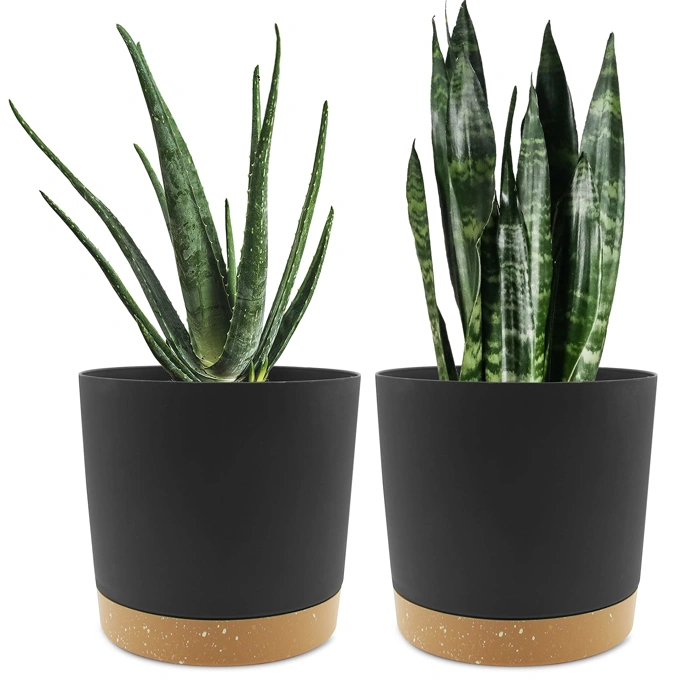
QCQHDU 8 inch Plant Pot, 2 Pack with Drainage Holes & Saucer
When you're just starting your houseplant collection or adding a few pots without spending much, the QCQHDU 8 inch Plant Pot 2-pack offers a practical entry point. Priced at $16.99 for two pots, each comes with drainage holes and a matching saucer - two features that help prevent overwatering and protect surfaces from runoff.
The 8-inch diameter fits common starter plants like pothos, snake plants, and philodendrons, giving roots enough room to establish without the excess soil that can stay soggy in oversized containers. The included saucers catch drainage, so you don't need to buy trays separately or worry about water pooling on windowsills or shelves.
With a 4.5 out of 5 rating, this set has proven reliable for beginners who want straightforward drainage without trial and error. The two-pack format also means you can pot a new plant and have a backup ready, or refresh two plants at once while keeping your budget in check.
Because drainage holes are built in, you won't need to drill or layer pebbles at the bottom - water flows out naturally, reducing the guesswork around watering frequency. For anyone testing the move from decorative cache pots to functional growing pots, this is a low-risk way to see the difference drainage makes in plant health and growth pace.
- ✅ Two 8-inch pots with drainage holes and saucers for $16.99
- ✅ Fits common starter plants like pothos and snake plants
- ✅ Built-in drainage simplifies watering and reduces overwatering risk
- ✅ Two-pack format supports expansions or refreshes on a budget
- ⚠️ No brand details or material specifications provided
- ⚠️ Basic design may not suit decorative or statement display needs
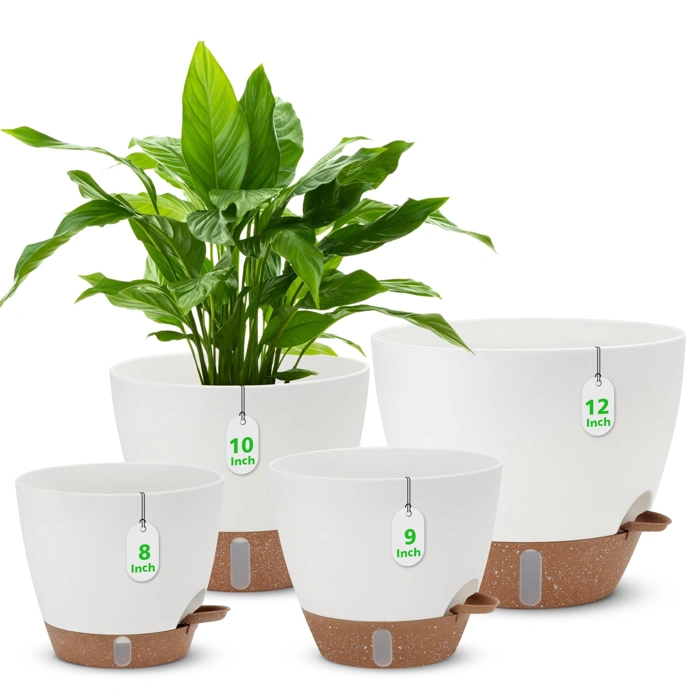
12" 10" 9" 8" Self Watering Plastic Pots with Water Level Indicator, White
If you worry about over-watering or struggle to keep a consistent schedule, this set of four self-watering plastic pots (8", 9", 10", and 12") offers a practical solution. Each pot includes a built-in water reservoir and a visible water level indicator, so you can see at a glance when it's time to refill - no guesswork, no root rot from accidental flooding.
The reservoir design means you'll water less often, typically once every week or two depending on your plant and environment. That makes this set especially useful if you travel frequently or simply want to simplify your routine. The four graduated sizes let you pot everything from a compact pothos to a medium fiddle-leaf fig using the same watering system, which keeps your care approach consistent across your collection.
At $32.99 for the four-pot set and a 4.6 rating, the price works out to about $8 per pot - reasonable for the time-saving feature and the flexibility of having multiple sizes on hand. The white plastic finish is clean and lightweight, though it won't offer the same visual warmth as ceramic or the breathability of terracotta. If low-maintenance watering is your priority and you're comfortable with a simple modern look, this set delivers reliable function without adding complexity to your plant care.
- ✅ Water level indicator removes guessing
- ✅ Reservoir reduces watering frequency
- ✅ Four sizes (8 - 12 inches) for flexibility
- ✅ Lightweight and easy to move
- ⚠️ Plastic won't breathe like terracotta
- ⚠️ Simple appearance lacks decorative detail
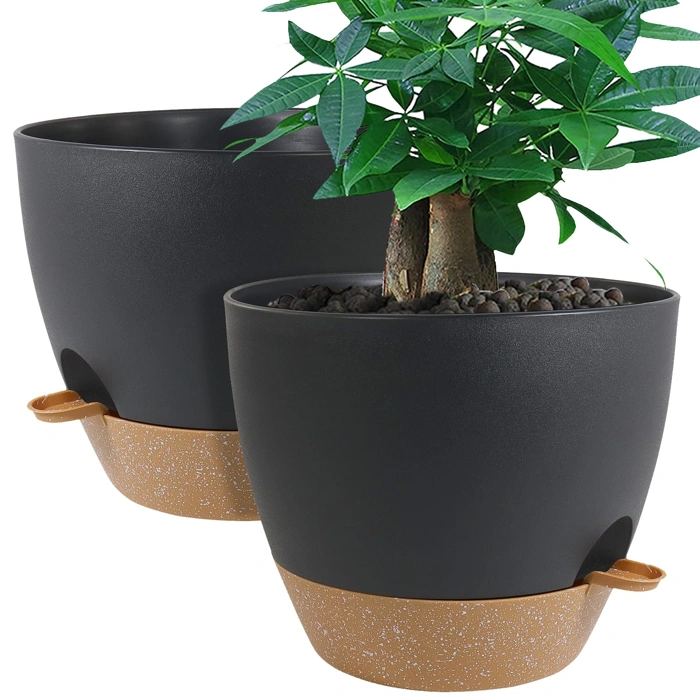
UOUZ 12 inch 2-Pack Large Self Watering Plastic Planters with Deep Reservoir, Black/Brown
Larger houseplants like monstera or fiddle leaf fig need pots that balance size, watering convenience, and visual presence. The UOUZ 12 inch 2-Pack Large Self Watering Plastic Planters deliver on all three, pairing a deep reservoir with black and brown color options that fit neutral and warm-toned interiors alike.
The deep reservoir is the standout feature. It holds enough water to extend the interval between fill-ups, which matters when you're managing bigger plants with established root systems. You fill through a simple opening, and the pot draws water upward as the soil dries. This design reduces the risk of overwatering while keeping moisture available when the plant needs it.
At the listed size, these planters suit plants that have outgrown multiple- to larger pots. The plastic construction keeps the weight manageable even when filled with soil and water, and the dual-color pack - one black, one brown - offers flexibility if you're styling a mix of furniture finishes or rotating plants between rooms.
The $41.91 price for two pots compares well to buying single large planters separately, especially self-watering models. The 4.6 rating reflects consistent performance across a range of plant types and watering routines. If you have one or two statement plants ready for a larger home, or you're looking to simplify watering for floor-standing greenery, this 2-pack covers both the functional and budget angles without locking you into a single aesthetic.
- ✅ Deep reservoir extends watering intervals for larger plants
- ✅ 12-inch size fits monstera, fiddle leaf fig, and other statement houseplants
- ✅ Two-pack with black and brown options for versatile decor
- ✅ Lightweight plastic construction even when filled
- ✅ $41.91 for two pots offers good value versus single large planters
- ⚠️ Plastic finish may not suit all high-end or minimalist interiors
- ⚠️ Self-watering design requires initial setup and monitoring to match plant needs
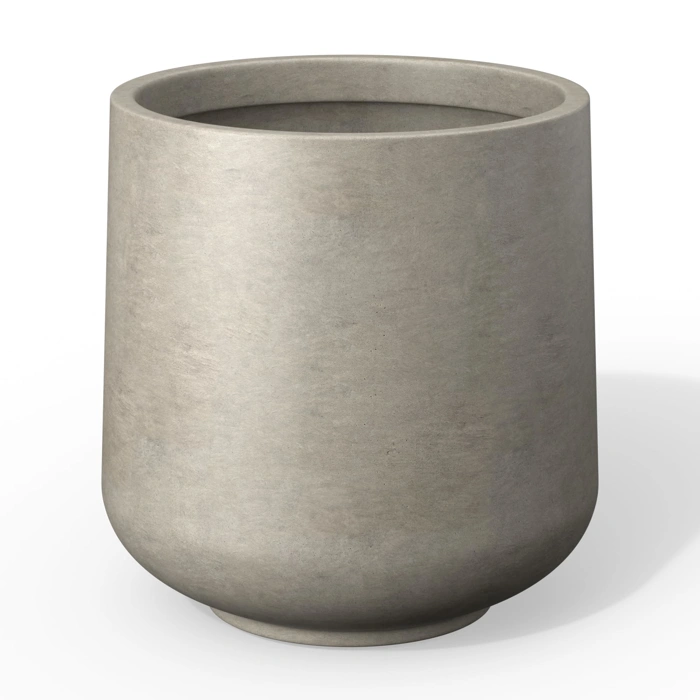
Kante 11.6" Round Concrete Planter with Drainage Hole & Rubber Plug, Weathered
The Kante 11.6" Round Concrete Planter with Drainage Hole & Rubber Plug offers a weathered finish that brings a sophisticated, modern-industrial look to any room. Concrete planters like this one add visual weight and texture, making them ideal when you want a statement piece that anchors a corner, shelf, or tabletop with a Pinterest-worthy aesthetic. The planter includes a drainage hole with a removable rubber plug, so you can use it with free-draining soil for plants that need dry-down periods or plug the hole for decorative use indoors without a saucer.
At $70.03 and a 4.3 rating, this planter is priced as an investment piece. The weathered concrete finish pairs well with minimalist or boho interiors, and the 11.6-inch diameter suits medium houseplants like fiddle-leaf figs, snake plants, or larger pothos. The tradeoff is weight: concrete planters are heavy even when empty, so this is best for a permanent or semi-permanent spot rather than a pot you'll move weekly. If you rearrange plants often or need portability, lighter materials like resin or ceramic will be easier to handle. For focal plants in stable locations, the Kante planter delivers durability and a polished look that elevates your space.
- ✅ Weathered concrete finish adds modern, industrial texture
- ✅ Drainage hole with removable rubber plug for indoor or outdoor flexibility
- ✅ 11.6-inch size fits medium houseplants
- ✅ Durable material for long-term use
- ⚠️ $70.03 price point is higher than plastic or resin alternatives
- ⚠️ Heavy weight makes relocation difficult
- ⚠️ Best for permanent placement, not frequent movers
Quick Checklist: Pot Features That Support Plant Health
- Drainage hole (or removable plug) to prevent standing water
- Saucer or tray to protect surfaces from moisture
- 1 - 2 inches wider than current root ball for growth room
- Material appropriate for your watering habits (porous for forgetful, sealed for attentive)
- Stable base that won't tip with top-heavy plants
- Weight you can lift when soil is wet (especially for large pots)