We may earn a commission when you buy through links on this page, at no extra cost to you. How this works.
A handful of cuttings in recycled jam jars can start to look like forgotten science experiments instead of the fresh, intentional display you imagined. A dedicated glass propagation station costs less than $20 and transforms that scatter of vessels into a cohesive piece of living decor. The frames hold tubes or vases at consistent heights and angles, so every stem is visible and the whole arrangement feels purposeful rather than makeshift.
Three distinct setups answer different space and style needs. A desktop wooden stand keeps several glass tubes clustered in one compact footprint, ideal for a sunny corner of a desk or countertop. Wall-mounted multi-tube displays free up surface area and draw the eye upward, turning an empty stretch of wall into a vertical garden. Decorative mushroom-shaped vases combine function with whimsy, working as standalone accent pieces or grouped for impact. Each option organizes cuttings cleanly, protects glass from tipping, and makes water changes straightforward.
Every station in this guide sits at or below the $20 mark and carries a rating of 4.6 stars or higher. That combination of price, proven satisfaction, and practical design means you can upgrade your windowsill without second-guessing the investment. Choose based on how much horizontal space you have, whether you want wall installation, and the aesthetic that fits your room.
Use the matching tool first
Start with Indoor Plant Light Matcher if you want to narrow the fit before checking current offers.
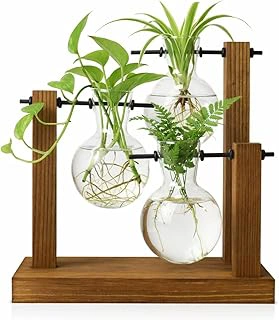
Plant Propagation Station with Glass Vases and Wooden Stand for Cuttings
The Plant Propagation Station with Glass Vases and Wooden Stand delivers a compact desktop solution for anyone working with limited space. Priced at $19.97 with a 4.8-star rating, this stand places clear glass tubes in a stable wooden base that sits securely on a desk, bookshelf, or narrow windowsill without the commitment of wall mounting.
The wooden frame brings warmth to modern or boho-style rooms, and the glass vases lift out for cleaning or refilling without disturbing the stand itself. That removable design makes water changes straightforward when you're rooting several cuttings at once. The footprint stays small enough for apartment desks or tight kitchen counters where floor-to-ceiling window light is available but wall space isn't.
Because the stand rests on a surface rather than hanging, it offers more stability if you move it between windows or rearrange furniture seasonally. The tradeoff: you'll root fewer stems at a time compared to larger wall-mounted options, so this works best when you propagate in small batches or rotate cuttings as they develop roots.
Check the product listing to confirm the number of included vases and verify the stand dimensions fit your intended surface before ordering.
- ✅ Compact footprint fits desks and narrow windowsills
- ✅ Removable glass vases simplify cleaning and water changes
- ✅ Stable wooden base requires no wall mounting
- ✅ Warm aesthetic suits modern and boho decor
- ⚠️ Fewer tubes than wall-mounted alternatives
- ⚠️ Surface placement reduces vertical growing space
What to Look for in a Glass Propagation Station
A good propagation station turns a handful of cuttings into a living display, so the right choice balances practical function with how it fits your space. Start with the number of vases or tubes you need - single-stem bulbs work well for slow growers or testing new cuttings, while three- to five-tube stands let you curate a small collection without cluttering the sill. Footprint matters in tight quarters: desktop stands with wooden or metal frames typically occupy six to ten inches of counter space, wall-mounted holders free up surface area but require a drill or adhesive hooks, and freestanding decorative vases sit anywhere but offer less density per square inch.
Stability is non-negotiable if you share the space with pets, children, or an open window. Stands with wide bases or weighted frames resist tipping better than tall, narrow designs. Wall mounts eliminate the knock-over risk entirely, though you lose the flexibility to rearrange on a whim. Check how easily you can lift each tube out for water changes - twist-lock holders or snug wood rings slow the process, while open cradles or wide-mouth glass let you swap fresh water in seconds.
Visibility of root growth is half the charm. Clear, thin-walled glass shows fine root hairs and algae buildup equally well, so plan to rinse tubes weekly if they catch direct sun. Tinted or frosted glass hides discoloration but also dims the view. For renters, adhesive or suction-cup mounts avoid wall damage, though weight limits usually cap the display at two or three small tubes. Compact desktop stands travel easily between rooms and don't leave marks, making them the safer bet when you can't predict your next layout. The trade-off is simple: vertical wall displays maximize window real estate and keep the counter clear, while freestanding options offer mobility and simpler setup at the cost of a dedicated footprint.
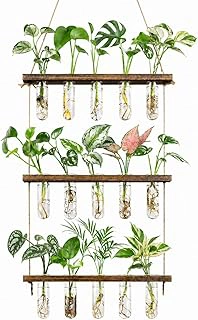
3 Tier Wall Hanging Propagation Station with 15 Glass Test Tubes
If your windowsills are already crowded but you still want to expand your propagation collection, this 3-tier wall-mounted station holds 15 glass test tubes vertically, turning unused wall space into a living display. Priced at $18.99 with a 4.7-star rating, it offers the highest cutting capacity of the three stations reviewed here while freeing up counters and shelves completely.
The vertical arrangement works especially well in small apartments or near bright windows where you want maximum visual drama without sacrificing surface area. Each tier holds five tubes, creating a cascading effect that catches light beautifully when hung adjacent to natural light sources. The individual tubes lift out easily for water changes, so you don't need to disturb the entire arrangement when refreshing one or two cuttings.
The main tradeoff is installation. This station requires wall mounting, which may be a concern if you rent or prefer furniture you can move freely. You'll need to verify that mounting hardware is included or plan for command strips and similar rental-friendly hanging methods. Once installed, though, it stays put and provides a stable home for more cuttings than either freestanding option - ideal if your propagation hobby has outgrown your available shelf space.
This station makes sense when you have wall access, plenty of cuttings to display, and limited horizontal room. It's less practical if you rearrange frequently or want flexibility to rotate your display between rooms.
- ✅ Holds 15 tubes for maximum cutting capacity
- ✅ Frees up counters and windowsills
- ✅ Individual tubes remove easily for water changes
- ✅ Creates dramatic vertical display near windows
- ⚠️ Requires wall mounting - challenging for renters
- ⚠️ Less flexible than freestanding stations
- ⚠️ Installation hardware may need verification
How to Set Up Your Propagation Station for Success
Getting your propagation station set up correctly from the start makes the difference between healthy new roots and stems that sit stagnant for weeks. The process is straightforward once you understand a few key steps that work with how stem cuttings naturally develop roots in water.
Start by choosing a spot near a window that gets bright, indirect light for most of the day. Direct sun can overheat the water and stress cuttings, while dim corners slow root development. An east-facing windowsill or a table within three feet of a south or west window typically works well. The light helps drive photosynthesis even without soil, giving cuttings the energy they need to form new roots.
Fill your glass vases with room-temperature tap water or filtered water, leaving about an inch of clearance at the top. Cold water can shock tender stems, and overfilling makes water changes messy. If your tap water is heavily chlorinated, let it sit out overnight before use or switch to filtered water.
When you take cuttings from your plants, use clean scissors or pruning shears to make a cut at a 45-degree angle just below a node - the small bump on the stem where leaves emerge. The angled cut increases the surface area for water absorption and root formation. Most houseplants root best from cuttings that are four to six inches long with at least two or three nodes.
Strip off any leaves that would sit below the waterline. Submerged foliage will rot within days, clouding the water and creating conditions that encourage bacterial growth. Leave two to four leaves above the water to continue photosynthesis.
Establish a water-change routine every five to seven days. Fresh water prevents stagnant conditions and ensures dissolved oxygen stays available for developing roots. During the change, rinse the stems gently and wipe away any film that has formed on the glass. This simple habit prevents most of the problems beginners encounter.
A common worry is whether roots are actually growing or if the cutting has stalled. In the first week, you might see small white bumps forming at the nodes - these are root primordia, the early stage before visible roots emerge. True roots usually appear within two to three weeks for fast-rooting plants like pothos and philodendron, though some species take four to six weeks. If stems stay firm and leaves look healthy, the cutting is still viable even if you don't see roots yet.
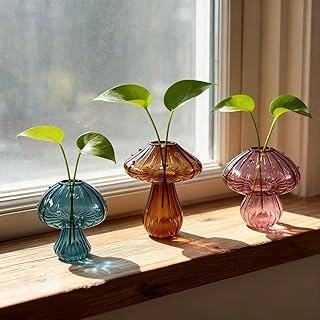
Set of 3 Glass Mushroom Propagation Planters for Indoor Plants
The three-piece mushroom glass set brings a playful, sculptural look to windowsill propagation at $16.99, making it the most affordable choice in this comparison. Each vase features a rounded mushroom cap silhouette with a clear glass base that lets you watch roots develop, and the freestanding design means you can rearrange them across different windows or move them room to room without tools or brackets.
This set holds three cuttings total, which limits your display capacity compared to multi-tube desktop stations or wall-mounted racks. But the whimsical shape and portability make these planters feel more like decorative accent pieces than utility holders, especially if you prefer mixing propagation vases among candles or framed photos on a sill. The clear glass shows root progress clearly, and the stable rounded base keeps each vase upright on narrow ledges.
Because these require no installation, they work particularly well for renters or anyone who wants to test propagation habits before committing to a larger fixed display. You can start with three favorite cuttings, see how often you refresh them, and decide later whether a higher-capacity option fits your routine. The mushroom shape also photographs well if you share plant progress online, though the trade-off remains straightforward: charm and flexibility in exchange for fewer slots.
- ✅ Lowest price point at $16.99 for three-piece set
- ✅ Playful mushroom shape adds decorative accent to windows
- ✅ Freestanding design allows easy rearranging between rooms
- ✅ No installation required - ideal for renters
- ✅ Clear glass base shows root development
- ⚠️ Only three vessels limit display capacity
- ⚠️ Fewer slots than multi-tube or wall-mounted options
5 Easiest Plants to Propagate in Glass Vases
- Pothos (golden or marble queen): roots appear in 7 - 10 days, nearly foolproof
- Philodendron (heartleaf): fast-rooting, tolerates lower light, perfect for beginners
- Spider plant babies: root quickly when placed in water, bonus decorative appeal
- Tradescantia (wandering jew): vibrant color, roots in under a week, grows aggressively
- Mint or basil cuttings: kitchen herb option, roots fast, can replant or keep in water
Which Propagation Station Fits Your Space?
Choosing the right propagation station depends on where you have space and how many cuttings you plan to keep visible. The wooden desktop stand works well on a windowsill or small table, offering five dedicated tubes in a compact footprint. If you rent or move frequently, it requires no wall damage and travels easily. The tradeoff is limited capacity - once those five spots are full, you'll need additional stations or alternate display methods.
The wall-mounted 3-tier option opens up vertical space, which is especially useful in apartments where horizontal surfaces compete with books, plants, and daily clutter. Mounting does require drilling pilot holes and confirming the wall can support the weight of filled glass tubes, so it's better suited to spaces where you can install hardware. In return, you gain significantly more display area without sacrificing countertop or shelf real estate.
The mushroom-style vases offer the most flexibility. You can place them anywhere - grouped on a tray, scattered across a bookshelf, or lined up along a narrow ledge. They're also the lowest-cost entry point, making them a practical way to test whether you enjoy propagation displays before committing to a larger stand or mounted system. The downside is less visual cohesion if you want a unified look, and you'll need to source multiple vases to match the capacity of the other two options.
If you have ample windowsill space and want a ready-to-use setup, the wooden stand delivers immediate structure. For tight apartments with tall windows, the wall-mounted station maximizes vertical real estate. And if you're still exploring your propagation routine or prefer to rearrange frequently, starting with a set of mushroom vases keeps cost and commitment low. Check current prices and recent reviews for any quality updates, and confirm dimensions against your available space before ordering.