We may earn a commission when you buy through links on this page, at no extra cost to you. How this works.
Fiddle leaf figs have earned their place as one of the most popular indoor plants, thanks to their dramatic, violin-shaped leaves and sculptural presence. Whether you're scrolling through design inspiration or walking past a nursery display, it's easy to see why they catch your eye. But before you bring one home, it's worth understanding what you're signing up for.
These trees deliver high-impact decor, but they also come with real care requirements. Light, water, and space all play a role in whether your fiddle leaf fig thrives or struggles. Live trees typically start around $27, while high-quality artificial alternatives range from $32 to $54, depending on size and detail. The choice between live and faux isn't just about budget - it's about how much time and attention you're willing to invest.
This guide walks through the practical considerations that shape your decision: how much natural light your space offers, what watering routine you can realistically maintain, how large the tree will grow, and whether an artificial option might better suit your lifestyle. Think of it as a reality check before purchase, designed to help you choose a fiddle leaf fig that fits your home and your habits.
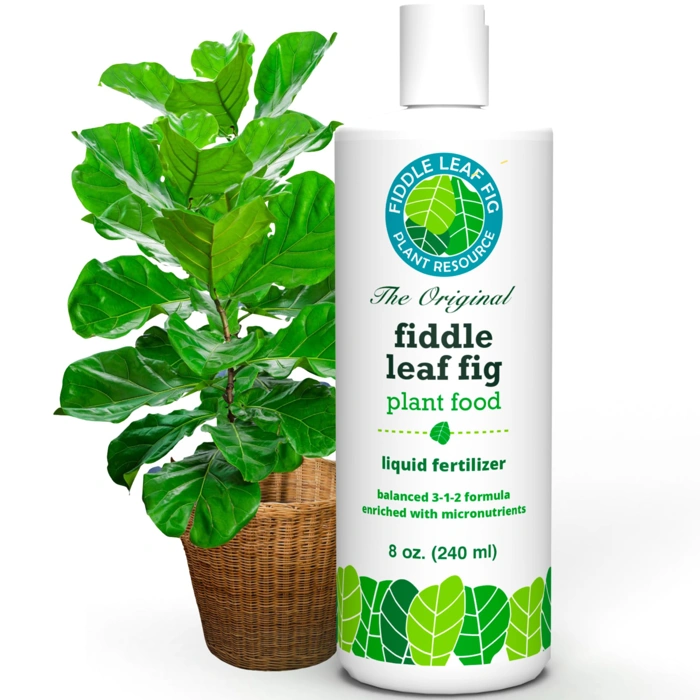
Amazon.com : Fiddle Leaf Fig Plant Food – 3‑1‑2 Balanced NPK Liquid Fertilizer for Larger Leaves, Stronger Roots & Steady, Vibrant Growth | Suitable for All Ficus Including Ficus Lyrata | Made in USA | 8 oz : Patio, Lawn & Garden
Once your fiddle leaf fig is settled in and showing active growth, a balanced fertilizer helps maintain momentum during the growing season. This 3‑1‑2 NPK liquid fertilizer is formulated specifically for ficus plants, including Ficus lyrata, and comes in an 8 oz bottle for $27.99. The 4.6/5 rating reflects feedback from growers who use it to support larger leaves and stronger root development when applied as directed.
The 3‑1‑2 nitrogen-phosphorus-potassium ratio delivers a gentle nitrogen boost to encourage foliage without over‑stimulating soft, weak growth. Phosphorus supports root health, while potassium contributes to overall plant vigor. Because it's a liquid concentrate, you dilute it with water according to label instructions and apply during regular watering - typically every few weeks during spring and summer, then pause or reduce frequency in fall and winter when growth slows.
This product works best when your tree already receives adequate light and consistent watering. Fertilizer won't compensate for poor placement or erratic care; it amplifies what the plant is already doing. If your tree is recovering from transplant shock or showing signs of root rot, wait until it stabilizes before introducing any feeding routine. Made in the USA, the formula is designed for indoor ficus varieties, so you're not adapting a general‑purpose outdoor fertilizer to houseplant needs.
The 8 oz size is compact and should last several months for a single tree, depending on pot size and application frequency. Measure carefully - over‑fertilizing can lead to salt buildup in the soil, which may cause leaf burn or root damage over time. If you notice white crust on the soil surface or pot rim, flush the soil with plain water and dial back your feeding schedule.
- ✅ 3‑1‑2 NPK ratio tailored for ficus plants
- ✅ Liquid concentrate mixes easily with water
- ✅ Supports larger leaves and root health when used as directed
- ✅ Made in USA
- ✅ Compact 8 oz size lasts several months for single tree
- ⚠️ $27.99 price point for 8 oz may feel steep for occasional use
- ⚠️ Over‑application can cause salt buildup and leaf burn
- ⚠️ Not effective if light, water, or root health issues are present
Who This Guide Is For
This guide is for anyone weighing the decision to bring a fiddle leaf fig into their home - whether you're drawn to the idea of a live tree or considering an artificial alternative. If you have a room with bright, indirect light near a window, are comfortable watering on a consistent schedule, and can accept that leaves may occasionally drop or brown as the tree adjusts, a live fiddle leaf fig can be a rewarding choice. These trees grow slowly indoors, and expecting steady, predictable growth in the first months will help you avoid frustration.
This guide is also for those who recognize that their space doesn't meet a live tree's needs. If your room lacks natural light, if you travel frequently, or if you prefer not to troubleshoot watering and humidity, an artificial fiddle leaf fig may better fit your routine. Understanding your lighting conditions, schedule, and tolerance for ongoing care before you buy will help you choose the option - live or faux - that you'll actually enjoy long-term.
Whether you're a first-time plant owner or simply new to fiddle leaf figs, this guide walks through the practical considerations that determine whether a live tree will thrive in your care or whether an artificial tree makes more sense for your lifestyle.
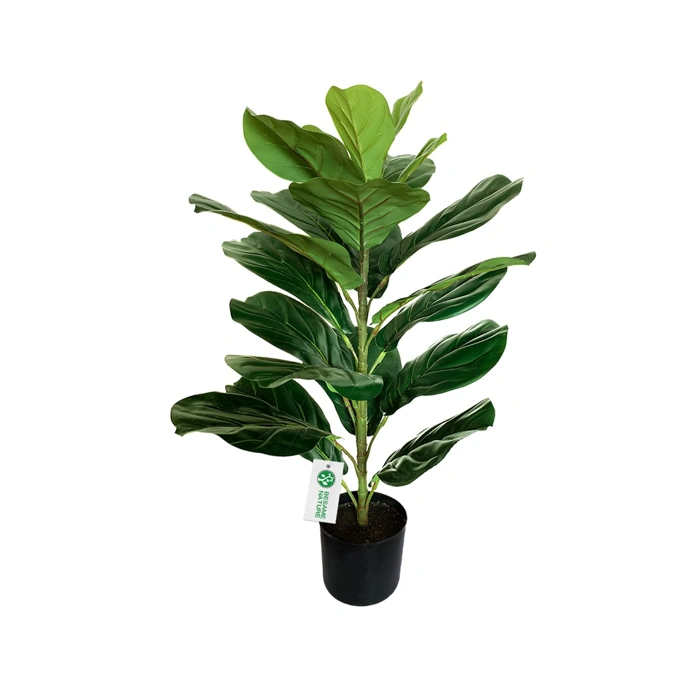
BESAMENATURE 30" Artificial Fiddle Leaf Fig Tree
The BESAMENATURE 30" Artificial Fiddle Leaf Fig Tree offers a compact, maintenance-free alternative for anyone who wants the look of a fiddle leaf fig without the commitment of care. Priced at $31.90 and rated 4.5 out of 5, this 30-inch artificial tree fits comfortably on desks, shelves, or side tables where a live plant might struggle with insufficient light or inconsistent watering.
This option makes sense if you've previously lost a live fiddle leaf fig to overwatering, underwatering, or low-light conditions. Because it requires no sunlight, no watering schedule, and no fertilizing, it removes the guesswork entirely. The smaller footprint also works well in apartments, offices, or rooms where floor space is limited and a full-size tree would feel overwhelming.
The tradeoff is straightforward: you gain reliability and convenience but lose the air-filtering benefits and the satisfaction of nurturing a living plant. The artificial foliage won't grow, won't respond to seasonal changes, and won't develop the subtle variations in leaf color that come with a healthy live tree. However, it also won't drop leaves, attract pests, or demand attention during travel or busy weeks.
For beginners testing whether fiddle leaf fig aesthetics suit their space, or for anyone prioritizing decor consistency over plant care, this artificial version delivers a guilt-free solution. It's particularly useful in low-light entryways, windowless bathrooms, or home offices where natural light is scarce and a live tree would decline quickly.
- ✅ No watering, sunlight, or fertilizing required
- ✅ Compact 30-inch size fits desks and shelves
- ✅ Works in low-light or windowless spaces
- ✅ Affordable at $31.90
- ⚠️ No air-filtering benefits of a live plant
- ⚠️ Won't grow or change over time
- ⚠️ Lacks the texture and variation of real foliage
Light Requirements: The Non-Negotiable
If there's one thing that determines whether your fiddle leaf fig thrives or slowly declines, it's light. This is the single most important factor to assess before you buy, and it's non-negotiable. Fiddle leaf figs need bright, indirect light for at least six hours each day. That means a spot near an east-facing or south-facing window with filtered light, or a west-facing window where direct sun is softened by sheer curtains. They can tolerate some morning sun, but harsh afternoon rays can scorch their leaves.
Dim corners, north-facing windows, and rooms that rely entirely on overhead lighting will not support healthy growth. In low light, fiddle leaf figs respond by dropping leaves, stretching toward the nearest light source, and producing weak, pale new growth. If your home doesn't have a naturally bright spot, you'll need to commit to supplemental grow lights - or reconsider whether this plant fits your space.
Before bringing a fiddle leaf fig home, spend a few days observing the light in your intended location. Notice how the sun moves across the room, whether nearby buildings or trees block the light, and how bright the space feels during different times of day. If you're unsure, a simple light meter or smartphone app can give you a clearer picture of the actual light levels. This upfront reality check will save you frustration and help you decide whether your space can truly support this plant's needs.
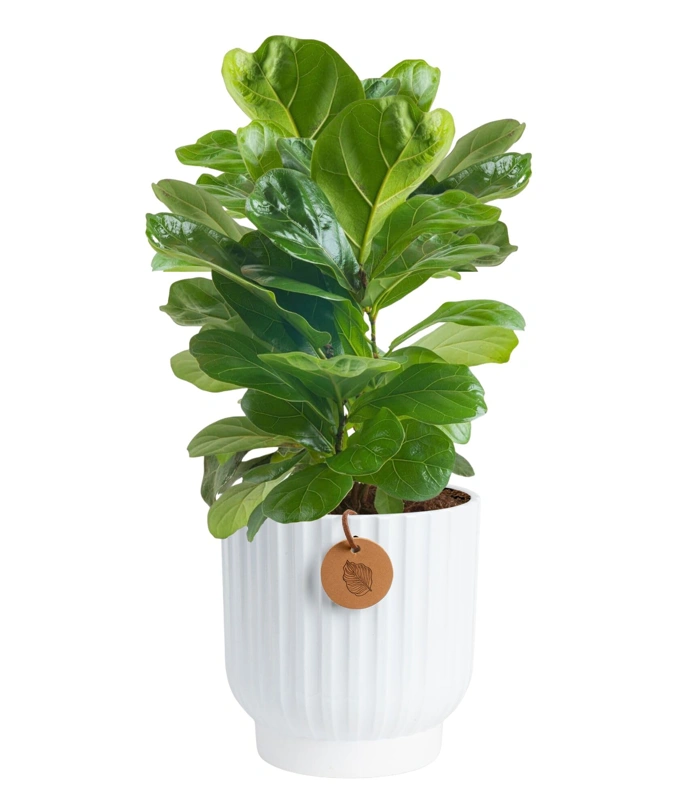
Costa Farms 1-Foot Live Fiddle Leaf Fig Tree in Modern Decor Planter
The Costa Farms 1-Foot Live Fiddle Leaf Fig Tree in Modern Decor Planter offers a budget-friendly entry point at $27.19 for those who want to start with a live tree without committing to a larger specimen. This starter-size tree arrives in a modern planter, ready to place on a shelf, desk, or windowsill.
At one foot tall, this tree lets you build your care routine gradually. You'll manage smaller watering volumes and have more flexibility in placement while the plant acclimates to your home. The compact size also means you can experiment with light conditions more easily than you could with a full-grown tree.
This fiddle leaf fig will grow slowly over time, eventually requiring repotting and more space as its root system develops. The included modern planter reduces the need for an immediate pot purchase, though you should verify it has drainage or plan to add a nursery liner to helps reduce the chance of waterlogging.
With a 4.2 out of 5 rating, this tree represents a practical choice if you're testing whether you can maintain the consistent watering schedule and bright indirect light that fiddle leaf figs require. The lower price point reduces risk while you learn the plant's signals for water, light stress, or environmental adjustment.
- ✅ Budget-friendly at $27.19
- ✅ Arrives in modern planter
- ✅ Starter size for building care skills
- ✅ Easy to relocate for light testing
- ⚠️ Will require repotting as it grows
- ⚠️ Smaller size means less immediate visual impact
- ⚠️ Planter drainage should be verified
Watering Reality and Root Health
Fiddle leaf figs prefer a consistent watering routine, typically every seven to fourteen days depending on light, temperature, and pot size. The key is to let the top two to three inches of soil dry out between waterings rather than sticking to a rigid calendar. Overwatering is the most common cause of root rot, which manifests as brown spots, yellowing lower leaves, and a musty smell from the soil.
Drainage is non-negotiable. Choose a pot with drainage holes and a saucer or tray to catch excess water. After watering thoroughly until water runs out the bottom, empty the tray within an hour to prevent roots from sitting in standing water. Heavy, waterlogged soil suffocates roots and invites fungal problems.
Check soil moisture by inserting your finger two to three inches down or by lifting the pot to gauge weight - dry soil feels significantly lighter. A moisture meter can remove guesswork, especially for larger pots where the surface dries faster than the interior. Consistency matters more than volume: irregular watering causes stress, leaf drop, and uneven growth.
If you notice soft, dark roots when repotting or a sour odor from the soil, root rot has likely started. Trim affected roots with clean scissors, repot in fresh, well-draining mix, and dial back watering frequency. Prevention through proper drainage and a regular check-in routine is far easier than recovery.
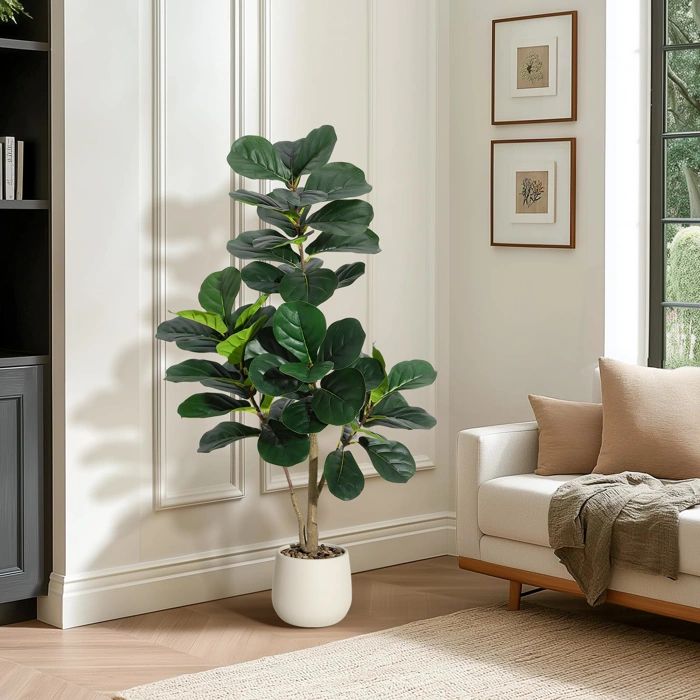
4 ft Artificial Fiddle Leaf Fig Tree with 48 Leaves in 7.8 in White Planter Pot
If you rent, travel frequently, or simply don't have the bright indirect light a living fiddle leaf fig demands, this 4-foot artificial tree offers an immediate solution. At $53.69, it arrives with 48 realistic leaves already arranged on a sturdy stem and includes a 7.8-inch white planter pot - no potting, no assembly beyond fluffing branches, and no ongoing care.
The full 4-foot height fills vertical space in corners, beside sofas, or flanking entryways without waiting months for a live sapling to mature. Because it's artificial, you skip the watering schedule, humidity monitoring, and leaf-drop anxiety that come with real fiddle leaf figs. It works equally well in dim hallways, windowless offices, or any room where natural light is scarce.
The tradeoff is obvious: you lose the air-filtering benefits and organic growth of a living plant, and close inspection will reveal synthetic materials. The white planter pot is lightweight plastic rather than ceramic, so you may want to nest it inside a heavier cachepot if the tree will sit in high-traffic areas. With a 4.2 out of 5 rating, most buyers appreciate the instant visual impact and zero-maintenance convenience, though a few note that leaf positioning requires occasional adjustment to maintain a natural silhouette.
This tree makes the most sense when you want the fiddle leaf fig look today - not six months from now - and when your space or schedule makes caring for a live specimen impractical.
Check current price and customer reviews
- ✅ Full 4-foot height with 48 leaves for instant impact
- ✅ No watering, no light requirements, no leaf drop
- ✅ White planter pot included at $53.69
- ✅ Works in dim rooms and rental spaces
- ⚠️ No air-filtering or living-plant benefits
- ⚠️ Lightweight plastic pot may need a heavier outer cachepot
- ⚠️ Leaf positioning may require occasional fluffing
Size, Growth, and Space Planning
Fiddle leaf figs start small but grow into commanding floor plants, so understanding their size trajectory is essential before you bring one home. Live trees are typically sold as 1-foot nursery plants in 4- to 6-inch pots, while artificial trees arrive ready-to-display at heights ranging from 30 inches to 4 feet or more. Knowing where each option fits - both now and in the future - helps you choose a tree that suits your space and lifestyle.
Live fiddle leaf figs grow slowly indoors, adding roughly 1 to 2 feet of height per year under good conditions. A young tree that starts at 12 inches may reach 3 to 4 feet within two to three years, and can eventually stretch to 6 feet or taller if the ceiling allows. Growth rate depends on consistent bright light, regular watering, and stable humidity; in lower-light rooms or with less frequent care, growth slows considerably. Pruning the top encourages branching and keeps the tree shorter and bushier, while leaving it unpruned allows vertical growth.
Artificial trees arrive at their final size and stay there. A 4-foot faux fiddle leaf fits into a corner today and occupies the same footprint five years from now, making it easier to plan furniture layouts and avoid repositioning as the tree matures. This predictability is useful in apartments with limited floor space or rooms where a live tree might outgrow its designated spot.
Measure your ceiling height and floor area before you buy. Live trees need at least 18 inches of clearance above their current height to accommodate a full season of growth, and you should leave room to rotate the pot every few weeks so all sides receive light. Artificial trees require only the space they occupy at delivery, with no need for growth allowance or rotation. Consider doorways, light fixtures, and nearby furniture when visualizing the final canopy spread - mature fiddle leaf figs can span 2 to 3 feet wide.
Repotting influences size as well. Live trees grow faster when moved to larger pots with fresh soil, and slower when kept root-bound. If you want to control height, choose a pot that's only 1 to 2 inches wider than the current root ball. Artificial trees may come with weighted bases or require a decorative planter; check the base diameter to ensure it fits your intended location without tipping.
Plan for the long term. A live fiddle leaf fig is a commitment to ongoing care and space adaptation, rewarding you with organic growth and seasonal changes. An artificial tree is a one-time decision that delivers instant scale and requires no adjustments. Both options can anchor a room, but only live trees will reshape your space over time.
Common Mistakes to Avoid
- Placing the tree in a low-light corner and expecting lush growth
- Watering on a rigid schedule instead of checking soil moisture
- Ignoring drainage: pots without holes trap water and rot roots
- Expecting fast growth: fiddle leaf figs are slow growers indoors
- Skipping fertilizer during the growing season (spring and summer)
- Moving the tree frequently: they dislike sudden light or temperature changes
Live vs. Artificial: The Real Tradeoff
Choosing between a live fiddle leaf fig and an artificial version comes down to lifestyle, space, and how much care you're ready to commit to. Both have real advantages, and neither choice is wrong - it's about what fits your daily routine and home environment.
A live fiddle leaf fig needs bright, indirect light for at least six hours a day, consistent watering when the top two inches of soil dry out, and regular feeding during the growing season. You'll also need to wipe down the leaves, watch for pests, and manage humidity if your home is dry. In return, you get a living plant that grows over time, produces oxygen, and brings the unique presence that only real foliage offers. There's satisfaction in watching new leaves unfurl and adjusting care as the tree matures.
An artificial fiddle leaf fig eliminates all of that. It works in windowless rooms, dim corners, or offices with no natural light. There's no watering schedule, no fertilizer, no leaf drop, and no risk of overwatering or root rot. High-quality faux trees can look remarkably realistic, especially from a few feet away, and they stay picture-perfect year-round. The tradeoff is a higher upfront cost for convincing replicas and the absence of growth, seasonal change, or air-purifying benefits.
If you travel frequently, work long hours, or simply want greenery without the learning curve, an artificial tree delivers consistency. If you enjoy the rhythm of plant care and have a bright room with stable conditions, a live tree rewards that attention with real growth and the subtle shifts that come with a living thing.
Consider your light situation first. If your space doesn't offer strong, indirect light for most of the day, a live fiddle leaf fig will struggle no matter how diligent you are. In that case, an artificial option makes more practical sense. If light is abundant and you're ready to learn watering cues and seasonal rhythms, a live tree becomes a long-term companion rather than a decoration.
Final Takeaway: Match the Tree to Your Reality
Fiddle leaf figs are stunning, architectural plants that can transform a room - but they're not forgiving. Before you bring one home, take an honest look at your space and routine. If you have a spot with bright, indirect light for at least six hours a day, can commit to a consistent watering schedule, and don't mind troubleshooting the occasional brown spot or dropped leaf, a live fiddle leaf fig can be incredibly rewarding.
But if your apartment is dim, your schedule unpredictable, or you'd rather not spend weekends diagnosing leaf issues, that doesn't mean you have to give up on the look. High-quality artificial fiddle leaf figs have come a long way - they offer the same visual impact without the light requirements, watering stress, or risk of failure. There's no guilt in choosing a faux tree that fits your lifestyle.
Whichever route you choose, do your homework before buying. Read recent reviews to confirm the plant arrives healthy or the artificial version looks realistic in real home settings. Compare current prices across retailers, and if you're going live, confirm the seller's return or replacement policy in case the tree arrives damaged or declines quickly. The right fiddle leaf fig - live or artificial - is the one that works for your reality, not just your Instagram feed.