We may earn a commission when you buy through links on this page, at no extra cost to you. How this works.
Climbing philodendrons grow faster and produce larger, more fenestrated leaves when they can anchor their aerial roots to a textured vertical surface. Without support, these plants sprawl horizontally, and their foliage often remains smaller than it would in nature. A moss pole mimics the bark of trees these plants climb in tropical forests, giving roots a moist, grippy surface to latch onto.
Both coir and bendable moss poles typically cost under $10 per pole, making them accessible upgrades for most indoor gardeners. The difference isn't in price - it's in how each type handles moisture, stability, and shaping. Coir poles use coconut fiber wrapped around a rigid core, offering excellent water retention and a rough texture that roots grip easily. Bendable poles, often made with sphagnum moss over a flexible wire frame, let you curve or train plants into specific shapes but dry out faster and require more frequent misting.
The right pole depends on three practical factors: how often you're willing to mist or water the pole itself, where the plant sits in your home, and whether you want a straight vertical support or the ability to guide growth around corners or up walls. Coir poles work well if you prefer low-maintenance watering routines and need a sturdy structure that won't tip. Bendable poles suit smaller spaces or creative arrangements where you want to direct vines along shelves or arches. This guide compares both types on moisture retention, structural stability, ease of use, and long-term durability so you can match the pole to your philodendron's needs and your care style.
Quick comparison
| 28-inch Bendable Plant Support Moss Poles, 3-Pack | Check current price and pack size |
| 2-Pack 28-inch Moss Poles for Monstera Plant Support | Check current price and pole height |
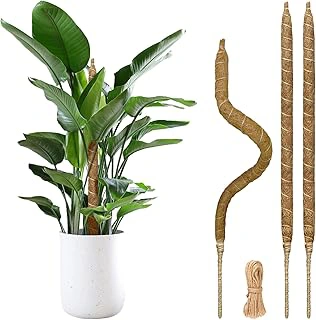
28-inch Bendable Plant Support Moss Poles, 3-Pack
The 28-inch Bendable Plant Support Moss Poles come as a three-pack for $8.99, earning a 4.7 out of 5 rating. This set delivers exceptional value - three poles for under nine dollars means you can support multiple small to medium philodendrons or stack poles to create taller structures as your plants mature.
The wire core running through each pole allows you to shape them into curves and angles, which is particularly useful in corner spaces, along awkward wall-mounted planters, or when training vines to follow specific paths. This flexibility works well for smaller philodendrons like Micans or Heartleaf varieties in tight apartment layouts where a rigid pole might block walkways or crowd other plants.
Each pole measures a larger amount, offering enough height for young climbers or plants in mid-sized pots. The bendable design lets you customize the support structure to match the natural growth direction of your plant, guiding aerial roots and stems without forcing them into unnatural positions.
The tradeoff is moisture management. Bendable moss poles generally require more frequent misting than thicker coir poles because the thinner moss layer dries faster. Plan to mist every day or two in typical indoor conditions, and check the moss surface regularly if your home runs warm or dry.
This three-pack is a smart choice when you're supporting several plants at once or experimenting with creative training techniques. The price point removes the hesitation around trying moss poles for the first time, and the flexibility opens up options that rigid poles can't provide. If your priority is shaping support to fit unusual spaces and you're comfortable with daily plant care routines, these bendable poles offer practical versatility without a significant investment.
- ✅ Three poles for $8.99 provide strong value for multiple plants or stacking
- ✅ Wire core allows custom shaping for corners, wall planters, and tight spaces
- ✅ 28-inch height suits smaller philodendrons and compact growing areas
- ✅ Flexibility lets you guide growth along natural vine patterns
- ⚠️ Requires more frequent misting than thicker coir poles
- ⚠️ Thinner moss layer dries faster in warm or low-humidity homes
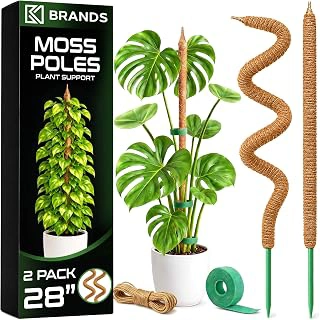
2-Pack 28-inch Moss Poles for Monstera Plant Support
For readers looking for a budget-friendly, low-maintenance support solution, this 2-pack of 28-inch coir poles offers reliable vertical structure for mature philodendrons. Priced at $9.99 and rated 4.6 out of 5, these poles use natural coconut fiber that holds moisture longer than many synthetic alternatives, reducing the frequency of daily misting sessions.
The rigid construction provides stable support for heavier foliage and larger climbing varieties. Coir's rough, textured surface gives aerial roots plenty of grip points, encouraging strong attachment as the plant grows upward. This natural material stays damp after watering, creating a humid microclimate around the stem that supports root development along the pole.
The tradeoff for this stability is a lack of flexibility. Unlike bendable options, coir poles maintain a straight vertical orientation, so they work best when you want traditional upright growth rather than curves or custom shapes. Fully saturated coir also adds noticeable weight to the pot, which may require a heavier base or repositioning considerations for taller installations.
This set suits gardeners who prefer a straightforward setup with less frequent watering attention and are comfortable with a fixed vertical growth pattern.
- ✅ Budget-friendly 2-pack at $9.99
- ✅ Coir retains moisture longer, reducing misting frequency
- ✅ Rigid structure provides stable support for heavier foliage
- ✅ Rough texture encourages strong aerial root attachment
- ⚠️ No flexibility for shaping or curving growth
- ⚠️ Can become heavy when fully saturated
What is a Bendable Moss Pole?
A bendable moss pole features a flexible wire core wrapped in sphagnum moss or synthetic moss material, letting you shape the support structure to fit your space. Unlike rigid coir poles that stand straight, these poles can curve around corners, follow walls, or create custom climbing paths tailored to small apartments or unconventional plant placement.
The wire core provides enough structure to hold a climbing philodendron's weight while remaining flexible enough to adjust as your plant grows. You can form gentle arcs, S-curves, or right angles without losing stability, making them practical for training vines in tight spaces or achieving a specific decorative look.
Bendable poles typically dry out faster than coir because the moss layer is thinner and more exposed. Plan to mist them every one to two days, especially in dry indoor environments, to maintain the moisture that encourages aerial root attachment. The wire frame won't absorb water the way coconut fiber does, so hydration depends entirely on the outer moss layer.
In larger pots, bendable poles may need anchoring stakes or ties to prevent tipping, since the flexible core offers less inherent stability than a solid coir stick. This tradeoff matters if you're growing a heavy trailing philodendron or plan to let the plant climb above three feet. For smaller plants or decorative training, the shaping advantage often outweighs the need for extra support.
What is a Coir Moss Pole?
A coir moss pole uses coconut fiber wrapped around a rigid core, typically a PVC tube or bamboo stake, to create a textured climbing surface for philodendrons and other aroids. The rough, fibrous surface encourages aerial roots to latch on and grow into the material, forming a secure attachment that supports the plant as it climbs vertically.
One of the biggest advantages of coir is its moisture retention. The coconut fiber holds water longer than many alternatives, keeping aerial roots hydrated between waterings. This can be especially helpful if you struggle to maintain consistent humidity or if your philodendron produces thick aerial roots that benefit from staying moist. You'll often need to mist or soak the pole every few days to keep the coir damp, and when fully saturated, the pole becomes noticeably heavier.
Because coir poles are built around a rigid core, they stand tall and straight without bending. This makes them a good match for vertical growth in standard pots, particularly when you want a clean, upright silhouette. The tradeoff is that the rigid structure doesn't allow you to shape or curve the pole to follow a plant's natural lean or to fit into corners. If your philodendron grows unevenly or you want to train it along a horizontal or angled path, a coir pole won't accommodate that flexibility.
Coir poles work well for growers who prioritize strong root attachment and consistent moisture, and who plan to keep their climbing plants growing straight up without needing to adjust the pole's shape over time.
Key Decision Factors: Moisture Retention, Stability, Aesthetics, and Ease of Use
Choosing between coir and bendable moss poles comes down to four practical factors: moisture retention, stability, aesthetics, and ease of use. Understanding how each pole performs in these areas will help you match the right support to your routine and your philodendron's needs.
Moisture retention matters most if you can't mist daily. Coir fibers hold water longer, creating a humid microclimate around aerial roots that encourages attachment and healthy growth. Bendable poles, often wrapped in thin moss or fabric, dry out faster and require more frequent attention. If you travel often or have a busy schedule, coir gives you a buffer.
Stability becomes critical as your plant grows taller or develops heavier foliage. Coir poles, especially thicker models anchored deep in the pot, stand firm under the weight of mature philodendrons. Bendable poles offer flexibility, but that same trait can lead to tipping or leaning if the plant becomes top-heavy and the pole isn't secured to a wall or stake. For large specimens, coir provides a sturdier foundation.
Aesthetics is a matter of style and space. Coir poles have an organic, textured appearance that blends well with natural or bohemian interiors. Bendable poles present cleaner lines and let you create custom curves or arches, fitting modern or minimalist rooms. If you want your support structure to follow a specific shape or tuck into a corner, bendable poles offer design freedom that rigid coir cannot.
Ease of use varies by how you like to work. Bendable poles install quickly - push them into the soil, shape them as needed, and you're done. Coir poles require occasional soaking to maintain moisture and perform best in larger pots that can accommodate their diameter and anchoring depth. If you prefer low-maintenance setup and the ability to adjust on the fly, bendable poles save time. If you're willing to refresh moisture and work with a more substantial structure, coir delivers long-term support with less fussing over stability.
Weigh these tradeoffs against your plant's size, your watering habits, and the look you want. Each factor shifts the balance, and the best pole is the one that fits your specific indoor environment and care routine.
The Verdict: Which Pole is Right for Your Plant and Your Style?
Most growers will find that their choice comes down to two factors: how often they want to water and how much space they can dedicate to vertical growth.
Bendable moss poles make sense if you live in an apartment, want to train vines along a wall or around a corner, or simply enjoy the hands-on process of shaping your plant as it climbs. The flexibility lets you fit a growing philodendron into tight spaces without forcing it into a rigid column. You will need to mist or water the pole more frequently to keep the moss moist, but the tradeoff is creative control over the plant's path.
Coir poles work well if you prefer a simpler watering routine, have a mature or heavy philodendron that needs solid support, or want your plant to grow straight up without constant adjustments. The natural texture encourages strong aerial root attachment, and the thicker coir retains moisture longer between waterings. The rigid structure means you commit to a vertical layout, but that stability is exactly what larger plants need.
Both options cost less than ten dollars and deliver reliable support when installed correctly. Rather than searching for a single best pole, match the design to your watering habits and the physical space you have available. A bendable pole that dries out because you forget to mist it will frustrate you, just as a tall coir pole will feel awkward in a low-ceiling room. Choose the pole that fits your routine, and your philodendron will climb happily on either one.
How to Train Your Philodendron onto a Moss Pole
Training a philodendron onto a moss pole works best when you start early, before the vines become too heavy or tangled. Insert the pole into the pot while the plant is still manageable, positioning it near the center or against the back edge to give the main vine a clear path upward. Push the pole deep enough into the soil to ensure it stands firmly without wobbling, especially if you're using a taller coir pole that will eventually support significant weight.
Gently guide the main stem toward the pole, keeping the natural growth direction in mind rather than forcing sharp bends. Use soft plant ties, velcro strips, or flexible wire covered with foam to loosely attach the stem every few inches along the pole. Tight binding can damage the tender growth points and restrict the flow of water and nutrients, so leave enough space for the stem to thicken as it matures. The goal is to hold the vine in place without creating pressure points.
Mist the pole surface regularly to keep it damp and encourage the philodendron's aerial roots to reach out and grip the material. For bendable poles, shape the wire into any curves or angles you want before you begin securing the vine - reshaping later can disturb established roots. If you're working with a coir pole, soak it thoroughly before training starts to activate the moisture-retaining fibers and make the surface more inviting for root attachment.
Training takes weeks, not days. The plant needs time to sense the moisture, extend its aerial roots, and anchor itself naturally. Check the ties every week or two, loosening or repositing them as the stem grows thicker. Patience during this phase reduces stress on the plant and results in a stronger, more secure attachment that supports healthy climbing for months ahead.
Head-to-Head Comparison: Coir vs. Bendable
- Moisture Retention: Coir holds water longer; bendable poles dry faster and need more frequent misting
- Flexibility: Bendable poles curve and shape to fit any space; coir poles stay rigid and vertical
- Root Attachment: Coir's rough texture grips aerial roots firmly; bendable moss can be smoother depending on the wrap
- Stability: Coir poles stand upright on their own; bendable poles may need anchoring in larger pots
- Maintenance: Coir poles require periodic soaking; bendable poles need daily or every-other-day misting
- Cost: Both types typically cost between $8 and $10 for multi-packs