We may earn a commission when you buy through links on this page, at no extra cost to you. How this works.
36 Pack Sticky Fungus Gnat Traps for Plants
Catch fungus gnats without clashing with your carefully curated plant corner.
Use the matching tool first
Start with Indoor Plant Light Matcher if you want to narrow the fit before checking current offers.
Fungus gnats can turn a thriving plant collection into a source of frustration, but the solution shouldn't be worse than the problem. Traditional sticky traps in day-glow yellow or orange might catch pests, but they also clash with the aesthetic you've worked hard to create. Every time you walk past your fiddle-leaf fig or pothos, those neon flags remind you that function won this round over form.
The good news: subtle sticky traps now deliver the same pest-catching ability without announcing themselves from across the room. Most discreet options sit in the $9.99 to $22.99 range, comparable to or even cheaper than their louder counterparts. The difference lies in thoughtful design choices like muted earth tones, shapes that mimic natural elements, or compact profiles that tuck behind foliage instead of standing front and center.
If you've spent time curating planters, plant stands, and arrangement styles that feel cohesive, a bright trap undoes that effort in seconds. Visitors notice the traps before they notice your healthy monstera. Photos of your plant corner need careful cropping to hide the visual clutter. The tradeoff between pest control and visual harmony has kept many plant owners tolerating gnats longer than necessary.
Discreet traps solve this by using colors that blend with soil, bark, or natural wood tones. Some take inspiration from seed pods or leaves. Others keep a low profile through smaller dimensions or strategic placement options. You still get the sticky surface that intercepts adult gnats before they lay eggs in your soil, but the trap itself becomes nearly invisible in your styled space. The following four options prove that effective pest management and beautiful plant displays can coexist at accessible price points.
What to Look for in a Stylish Sticky Trap
Choosing a sticky trap that works without clashing with your plant display starts with color. Traps in soft green or muted yellow tones sit quietly among foliage instead of announcing themselves as bright yellow flags. Green traps disappear behind broad leaves, while dusty yellows mimic natural variegation or fading foliage without drawing attention.
Shape and size matter for placement. Thin stakes slip into pots without crowding roots, and smaller profiles tuck behind stems or rest flat on soil. Dual-sided adhesive doubles the catching surface in the same footprint, which helps when space is tight or you want fewer visible traps per pot.
Pack size affects both coverage and value. Fungus gnats move between plants, so protecting an entire shelf or windowsill usually requires multiple traps. Larger packs spread the per-trap cost and give you enough to rotate as surfaces fill with debris.
Ease of placement includes how the trap anchors - rigid stakes push into soil quickly, while hanging options or flat sheets let you position traps above soil or against pot rims. The simpler the setup, the less disruption to your arrangement when you need to swap a full trap for a fresh one.
How to Use Sticky Traps Effectively
Position traps within an inch or two of the soil surface, where adult fungus gnats emerge and hover most often. Tucking a trap behind a larger leaf or placing it on the side of the pot that faces a wall keeps it out of sight while still catching insects drawn to the plant.
If you have a dense collection of plants on a shelf or windowsill, space multiple traps among the pots rather than relying on one central trap. Gnats are weak fliers and tend to stay close to their host plant, so distributed coverage works better than a single decoy.
Replace each trap when the sticky surface is mostly covered with debris or loses its tackiness, typically every two to four weeks depending on the severity of your gnat problem. A trap that's already full can't catch new insects and will blend in less effectively when coated in visible specks.
Avoid hanging traps directly in front of your most decorative foliage or at eye level if discretion matters to you. Low placement near the base of the plant or behind trailing vines keeps function intact without turning the trap into a focal point.
Alternative Pest Control Methods That Are Also Discreet
Sticky traps work best when paired with methods that tackle the root cause of fungus gnat infestations. Mixing mosquito bits into the top inch of soil introduces this product bacteria that target gnat larvae without changing the look of your potting mix - just water as usual and let the bacteria do the work over two to three weeks. A layer of decorative sand or polished pebbles across the soil surface blocks adult gnats from laying eggs while adding texture that complements modern planters. Bottom watering through saucers or cache pots keeps the soil surface dry, which discourages gnats from settling in the first place and reduces the need for frequent trap replacement.
These add-ons cost little and stay invisible to guests. Mosquito bits run about six to eight dollars for a container that treats dozens of pots, and a bag of decorative pebbles from a hardware store covers several medium planters for under ten dollars. None of these methods replace sticky traps entirely - they reduce the breeding cycle so traps catch fewer adults over time. If you already have an active infestation, start with traps to knock down the adult population, then add soil treatments and topdressing to prevent the next wave. The combination keeps your space looking intentional and your plants healthier without resorting to sprays or chemicals that smell or leave residue on leaves.
Keep Your Plants Pest-Free and Beautiful
Effective pest control for your indoor plants no longer means dealing with bright yellow eyesores scattered across your windowsills. The traps reviewed here prove you can catch fungus gnats and other small flying pests while maintaining the aesthetic you've worked to create.
When deciding which option fits your needs, think about pack size first. Smaller collections may do fine with an 8-pack, while larger plant setups benefit from bulk 20-pack or 36-pack options that lower the per-trap cost. Color matters more than many realize: neutral tones and botanical prints disappear into foliage, while even pale yellow catches the eye in certain lighting.
Dual-sided sticky surfaces double your trapping area without adding more sticks to your pots, a worthwhile feature if you prefer a cleaner look. Shape also plays a role in blending - butterfly and leaf silhouettes read as intentional decor rather than pest management tools.
Check current prices before committing, since multi-pack discounts shift regularly. Match the trap count to the number of pots you're protecting, and confirm the adhesive strength suits your target pest. Gnats require less aggressive stickiness than fruit flies, and over-sticky traps can be frustrating to handle during replacement.
Choose the style that disappears into your specific setup, stock enough to rotate them as they fill, and you'll keep your plant collection healthy without compromising the space you've designed.
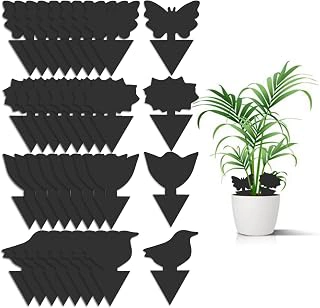
36 Pack Sticky Fungus Gnat Traps for Plants
If you keep more than a handful of houseplants, the 36 Pack Sticky Fungus Gnat Traps for Plants delivers enough coverage to protect an entire collection without buying refills every month. At $22.90 for 36 traps, this set breaks down to about multiple cents per trap, making it a practical choice when you need to monitor multiple pots or rotate traps as they fill up.
Each trap uses a yellow adhesive surface to attract fungus gnats and other small flying pests. The color sits somewhere between bright highlighter yellow and soft mustard, so it stands out enough to draw insects but won't dominate a neutral shelf or windowsill setup. You can cut the traps to fit smaller pots or tuck them behind foliage to keep them less visible from the front.
The traps come with stakes that push into soil, which works well for floor plants and larger planters where you can position them toward the back or side. For hanging baskets or crowded arrangements, you may want to trim the stake and lean the trap against the pot rim instead. The adhesive holds up for several weeks in typical indoor humidity, though you'll replace them faster in a high-traffic area where dust settles quickly.
With 36 traps on hand, you can place one or two in each pot and still have extras for problem spots or seasonal flare-ups. The pack size suits collectors who rotate plants between rooms, run a propagation station, or simply prefer to have backup traps ready without reordering. Rated 4.6 out of 5, this option balances coverage and cost for households that treat sticky traps as a routine part of plant care rather than a one-time fix.
- ✅ 36-trap pack covers large collections at about 64 cents per trap
- ✅ Yellow tone attracts pests without overwhelming decor
- ✅ Stakes allow flexible placement behind foliage or at pot edges
- ✅ Adhesive remains effective for several weeks indoors
- ⚠️ Bright yellow may still show through sparse or low-profile plants
- ⚠️ Large pack requires storage space if you don't use traps constantly
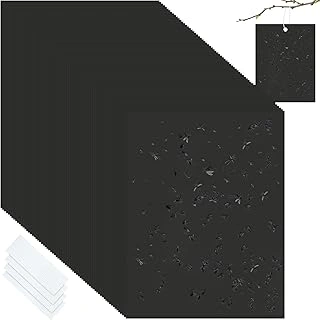
Qualirey 100 Pcs 6 x 8 Inch Sticky Traps for Gnats
When you have fungus gnats in multiple rooms or a heavy infestation, buying in bulk often makes sense. The Qualirey 100-piece set delivers 6 x 8 inch sticky traps at $22.99, working out to roughly the listed amount per trap. That per-unit price sits lower than many smaller packs, which appeals to plant owners managing a large collection or rotating traps frequently.
Each trap measures 6 x the listed size, offering enough surface area to catch gnats around medium to large planters. The yellow coating attracts flying pests, and the adhesive holds insects without creating a mess on surrounding surfaces. With 100 traps in the box, you can place several around the house, replace them as they fill, and still have plenty left for future outbreaks.
The quantity does require storage space, and the upfront cost is higher than buying a 10- or multiple-pack. If you only have a few plants or a minor gnat problem, a smaller set might be more practical. But for someone dealing with persistent gnats across a sunroom, kitchen windowsill, and bedroom corner, this bulk option reduces the need for constant reordering.
The traps come with a 4.3 out of 5 rating, reflecting solid performance for the price. They work well when placed at soil level or just above the pot rim, where gnats tend to hover. The larger count means you can experiment with placement without worrying about running out quickly, and you can share extras with friends who also struggle with indoor plant pests.
- ✅ 100-piece count provides extended supply for multi-room or heavy infestations
- ✅ 6 x 8 inch size offers good coverage around medium to large planters
- ✅ Lower per-trap cost compared to smaller packs
- ⚠️ Higher upfront cost may be unnecessary for small collections or minor gnat issues
- ⚠️ Requires storage space for the full 100-piece set
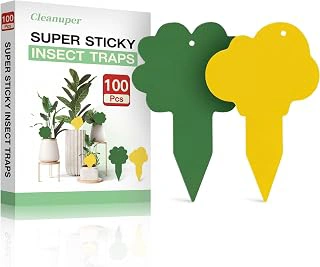
100 Pack Yellow & Green Sticky Gnat Traps for Plants
The 100 Pack Yellow & Green Sticky Gnat Traps for Plants offers a dual-color approach that helps the traps disappear into your greenery. At $9.99, this option delivers quantity and discretion without the premium price.
The yellow portions handle the trapping work that fungus gnats respond to, while the green sections create a camouflage effect against foliage. When you tuck these among leaves or near soil lines, the green blends with plant color and the yellow reads more like natural variegation than a pest control device. This design choice makes the traps less noticeable to guests while still intercepting insects near the root zone.
With multiple items in the pack, you can protect a large collection or replace traps frequently without worrying about running out quickly. The 4.9 out of 5 rating reflects consistent user satisfaction, suggesting the adhesive holds up and the dual tones work as intended across different plant types and lighting conditions.
If you're managing multiple plants on a tight budget, this pack provides coverage at about ten cents per trap. The color combination won't vanish entirely in every setup - bright white walls or minimalist pots may still show the outlines - but in mixed plantings or fuller foliage arrangements, the green portions do meaningful aesthetic work. For buyers who want both volume and a two-tone camouflage strategy, this pack balances function and price without sacrificing the subtlety that keeps your display looking intentional.
- ✅ Dual yellow and green colors blend naturally with plant foliage
- ✅ 100-piece pack provides extensive coverage at budget-friendly price
- ✅ High 4.9/5 rating indicates strong user satisfaction
- ⚠️ May still be visible against white walls or minimalist pots
- ⚠️ Green camouflage works best in fuller foliage arrangements
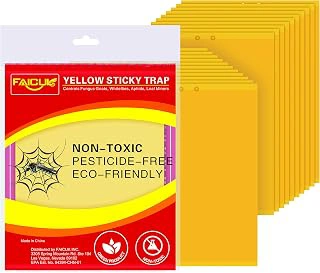
Faicuk 20-Pack Dual-Sided Yellow Sticky Traps
The Faicuk 20-Pack Dual-Sided Yellow Sticky Traps offer a straightforward, budget-friendly option for small plant collections or anyone testing sticky traps for the first time. Priced at $9.99 with a 4.4/5 rating, this pack provides 20 traps that catch pests on both sides, effectively doubling the surface area available compared to single-sided designs.
Each trap works front and back, which matters in tight spaces where you can't always position the trap perfectly. If a gnat approaches from either direction, the adhesive does its job. The compact pack size makes sense for apartment dwellers with a handful of plants on a windowsill or bookshelf - you're not left with a giant box of extras you'll never use.
The yellow color is typical for fungus gnat traps and will stand out more than neutral designs, but the smaller footprint of each individual trap keeps them less obtrusive than larger models. The dual-sided feature also means you can space traps farther apart and still maintain coverage, potentially reducing visual clutter.
This set works best when you have a modest number of plants and want an affordable entry point without committing to a larger, pricier pack. The price-per-trap ratio is competitive, and the dual-sided design delivers practical value in confined quarters where every inch of catching surface counts.
- ✅ Dual-sided adhesive doubles the catching surface
- ✅ Compact 20-pack size suits small collections
- ✅ Budget-friendly at $9.99
- ✅ Works well in tight spaces
- ⚠️ Yellow color more visible than neutral tones
- ⚠️ Smaller pack may require frequent reordering for larger setups
Quick Placement Tips for Maximum Discretion
- Place traps behind larger leaves or stems to hide from front view
- Position near soil level where fungus gnats typically emerge
- Use green traps for plants with mostly foliage, yellow for flowering plants
- Space traps evenly across shelves for wider coverage without clustering
- Replace traps every 2-3 weeks or when visibly covered with gnats